

























































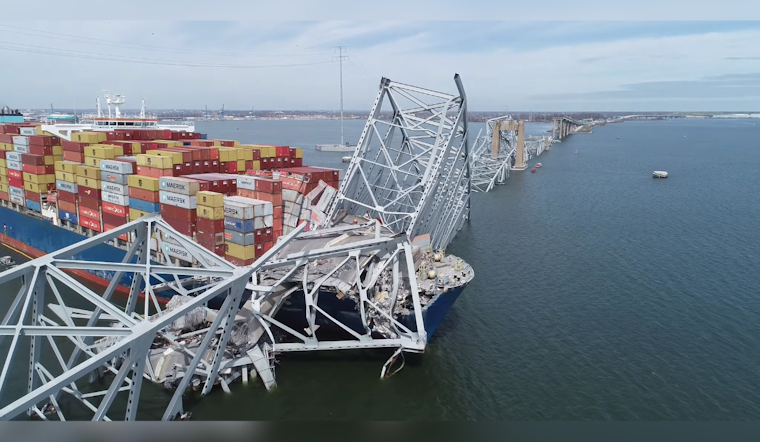
On Wednesday, Maryland officials greenlit a hefty $50.3 million emergency contract with Skanska USA Civil Southeast Inc., a Swedish construction firm, to clear out the wreckage from the March collapse of the Francis Scott Key Bridge. This contract was rapidly approved by a board led by Gov. Wes Moore, although the U.S. Army Corps of Engineers had already tackled the debris in the federal channel of the Patapsco River. Maryland swiftly stepped in to sign an emergency deal with Skanska in April, aimed at removing obstructions from additional channels to facilitate access for salvage and commercial ships, as reported by CBS News and WNKY.
The urgency to swiftly remove the collapsed bridge's debris was underpinned by concerns about impacting the local and national economy, noted Gov. Moore at the board meeting. Skanska was tapped for the job not only for proximity but also because it was "They were somebody that was available in the proximity, and we had knowledge that they could follow state procurement law and be responsive to the situation at hand," Bruce Gartner stated, executive director of the Maryland Transportation Authority, as detailed by CBS News Baltimore. The emergency no-bid contract bypassed standard state procurement protocols which dictate a competitive, fair, and transparent awarding of contracts.
Marshall Brown, representing the Laborers-Employers Cooperation and Education Trust in the Mid-Atlantic Region, spoke out at the meeting. He questioned the justification for bypassing other potential contractors, underlining that "This no-bid contract does not meet the standards," Brown said, "For those reasons, we stand firmly against the approval of this contract", as CBS News Baltimore quoted. Despite the opposition, the argument for urgency was that a regular bidding process would have delayed debris removal by at least eight months.
Moore recognized the need to speed up the rebuilding of the bridge, which he labeled as vital to Maryland's and the national economy. He acknowledged this during the board meeting, adding, "The Port of Baltimore is an essential artery for economic flow, economic activity across the country, and to put it simply, our focus on getting this done is not about nostalgia, it's about necessity", according to CBS News Baltimore. Further showing bipartisan support, Moore thanked President Joe Biden's administration for including a 100% federal cost share for the bridge's reconstruction in a supplemental budget to Congress.
The bridge collapse back in March came after the cargo ship Dali, having departed the Port of Baltimore, lost power and collided with a bridge column, causing it to fall and tragically result in the death of six construction workers. Maryland is now looking ahead and estimates the cost of a new bridge to be between $1.7 billion and $1.9 billion. Plans are in motion to complete a new span by the fall of 2028, setting a path for restoration and reinforcing the infrastructure integral to regional and national commerce.





