

























































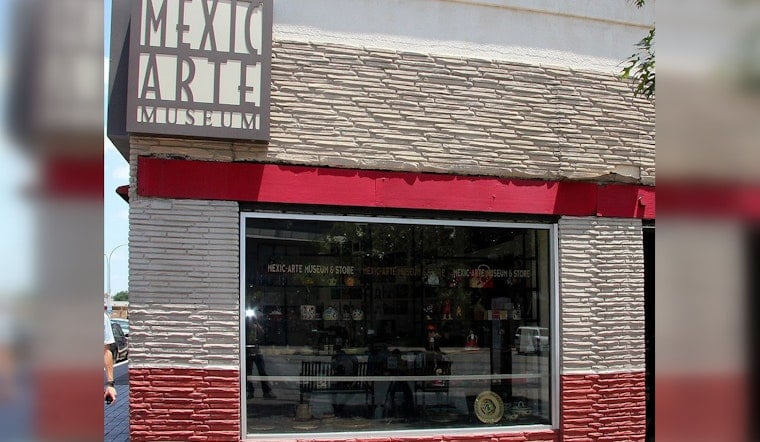
The Mexic-Arte Museum, located at the cultural crossroads of Fifth and Congress, has entered the spotlight as it spearheads efforts to designate the area as a state-recognized cultural district. Earmarked as the 5th Street Mexican-American Heritage Corridor, this initiative has been a decade-plus in the making with the ultimate goal of preserving and celebrating the deep-rooted Mexican American history woven into the fabric of downtown Austin. According to The Austin Chronicle, the museum's executive director Sylvia Orozco expressed that while the museum belongs to the community, there's a palpable lack of control over the corridor’s lifeblood.
Orozco and her team are committed to revitalizing and managing the corridor through enhanced signage, bringing to the fore historically significant landmarks like the Walker's AusTex Chili Company, which employed a significant chunk of Austin’s Mexican American workforce. As found in reports by The Austin Monitor, Mexic-Arte’s push for state recognition encompasses diverse public engagement efforts, helped along by a grant from the city's Economic Development Department, which yielded $120,000 for the cause.
The prospect of acquiring the state cultural district designation means a potential boost of $250,000 in annual funding, which could significantly impact programming and place-making for the district. These initiatives would intend to honor and communicate the area's cultural significance, especially relevant given the rapid changes Austin has experienced. "With the Downtown Austin Alliance behind the project and the city as well with the investment of the community engagement, I think the next step is there is going to be an investment in the marketing plan," Orozco told The Austin Monitor, highlighting partnerships that support the project's momentum.
The Mexic-Arte Museum notably provides the community with an array of creative and educational programs, including the culturally significant Viva la Vida festival and the amArte art workshop, which aims to engage underserved students. "We have received universally positive responses from the businesses. So, the future is bright for the corridor. That's beautiful," Orozco conveyed her optimism to The Austin Chronicle.
Meanwhile, the historic Palm School, a beacon within the Mexican American community until its closure in 1976, may also experience a renaissance. The Save Palm School Coalition, championed by local advocate Paul Saldaña, aims to transform the site into a museum ideally integrated within the vision for the cultural district. With Saldaña's family roots extending back to 1910 in Austin, he brings to the Save Palm School Coalition a deeply personal commitment. "It will be able to highlight Mexican-American history, Native American History, and African-American history," Saldaña told The Austin Chronicle.
As the Mexic-Arte Museum transitions into a larger role of district stewardship, it continues to prioritize reconstruction and fundraising efforts for its main building. In a recent development, the City Council waived fees exceeding $60,000, aiding in the museum's extensive $24 million rehabilitation project. The museum's historic facade is slated for preservation, while the interior is set for a complete overhaul. "We have basically fallen in love with the building, but we know it’s old and it has its deficits. Keeping that façade will be something wonderful, because it’s part of our history," Orozco shared her sentiments with The Austin Monitor.





