

























































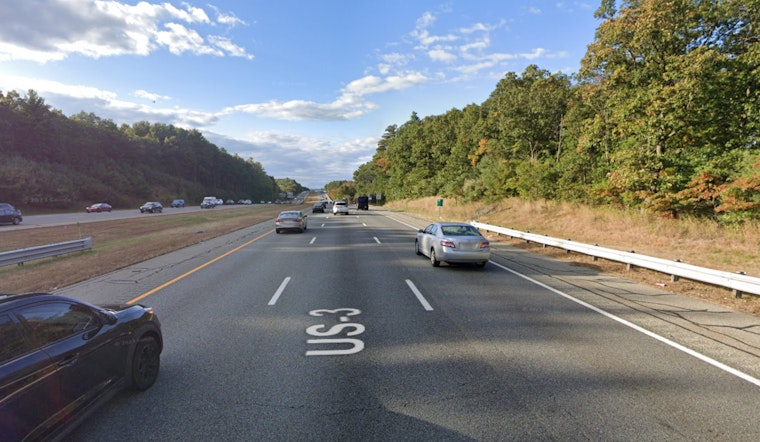
Drivers traversing the stretch of Route 3 from I-95 in Burlington up to the New Hampshire border can now legally press a bit harder on the accelerator. The Massachusetts Department of Transportation (MassDOT) has upped the speed limit along this 22-mile corridor to 65 mph, as reported by Boston.com. This increase is a jump from the previous 55 mph limit, a move intended to enhance safety by harmonizing traffic flow.
Early in the week, shoulder closures gave workers the opportunity to replace old signs with the updated ones flaunting the new speed limit. MassDOT justified the hike by noting that limits which are "unrealistically low" could spell danger on the roads by promoting disparity amongst driver speeds. "Increased uniformity in vehicle speeds will decrease crashes by reducing the likelihood of tailgating, improper passing, and other forms of reckless driving," says an announcement from MassDOT, according to Boston.com.
Adjustments to speed thresholds are not made on a whim; they're arrived at after careful consideration of how traffic naturally flows. The aim is to set a speed limit that fits within the 85th percentile—the velocity at about which 85% of drivers are traveling, factoring in elements like the geography of adjacent lands, the variety and expectations of drivers, and past records of road safety, as per details from MassDOT.
As for the traffic volume, reports from WCVB indicate a significant climb over the last several years. MassDOT's 2019 comprehensive traffic analysis highlighted an increase in the annual average daily traffic, climbing from 94,163 vehicles in 2012 to 112,793 in 2018. This uptick has, no doubt, influenced the decision making behind speed limit realignments. Drivers utilizing this route are now greeted with the reflective sheen of new 65 mph signage, courtesy of the state's efforts—a small but distinct shift in the daily commute that could make the journey swifter and potentially safer.





