

























































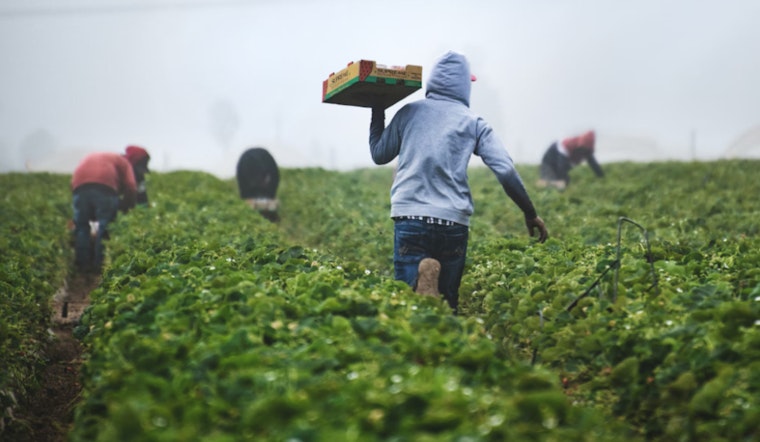
As South Texas grapples with an intensifying drought and searing heat waves, its agricultural community faces growing challenges. Farmers and ranchers around Southwest San Antonio, in an effort to adapt, have been reducing their cultivated acreage to conserve scarce water resources and switching to more drought-resistant crops. Larry Stein, a horticulturist at Texas A&M AgriLife Extension, highlighted the difficult conditions, stating to San Antonio Report, “The heat is bearable if you have water, but the big challenge we have is we’ve had some rain, but not rain to ease the drought.”
Stein, who assists farmers in the region extending from South San Antonio to San Antonio, including areas such as Atascosa County and Uvalde, emphasizes the significance of selecting the right drought-tolerant plants for survival in these arid conditions. However, Stein worries about long-term impacts, observing deeper issues such as wells running dry and an increase in people drawing water from the aquifers. The situation has prompted comparisons to an historical drought of the 1950s, with some farmers stating the current conditions are worse. Despite these harrowing signals, Stein maintains a forward-looking perspective, acknowledging the inherent optimism required in farming.
Water scarcity not only threatens local agriculture but also poses economic ramifications, as seen with the closure of the Rio Grande Valley Sugar Growers, Inc., Texas's last sugar mill, earlier this year. This event underscores the severity of drought's impacts on both farming practices and the broader economy. Regions are currently experiencing varying levels of drought; according to the U.S. Drought Monitor, Bexar County is undergoing a moderate drought with some surrounding areas facing extreme conditions. While water restrictions for SAWS customers are in effect, these do not apply directly to most farmers, who draw from wells tapped into local aquifers. Despite this, the water yields have reportedly decreased as well.
Local food systems have also felt the heat, with the San Antonio Food Bank's Mitchell Hagney discussing the farm's reliance on guaranteed water from the San Antonio River to irrigate its crops. Here, climate change presents a complex battle, as Hagney revealed to San Antonio Report, “Most of the large peach producers in the region like Fredericksburg now feel that they get a good peach yield once every three years. It used to be every year.” The phenomenon of "global weirding" describes this erratic pattern, with plants like organic peach trees requiring "chill hours" that have been scarce due to warmer winters.
The aggregate picture of agriculture in San Antonio and the bordering areas is one of perseverance amid adversity. Farmers are experimenting with resilient crops and innovative techniques to counteract the diminishing water supply and the encroaching threat of development, which continues to eat away at active farmland at a significant pace. As resources dwindle and conditions worsen, local farmers and food suppliers strategize to withstand the present reality while preparing for an uncertain future.



