

























































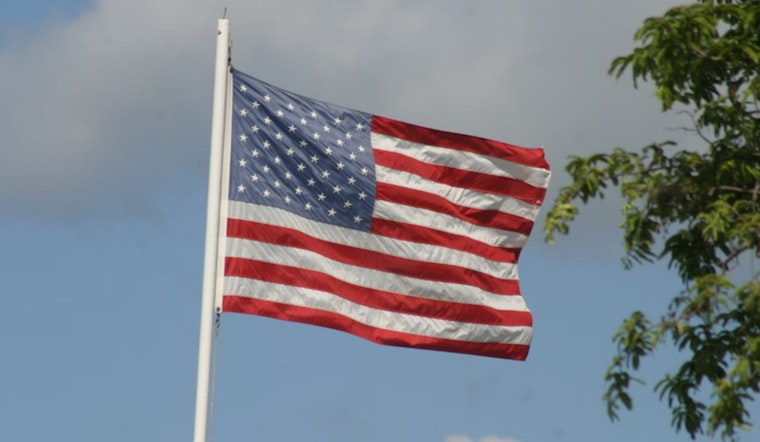
As Americans adorn their homes with flags and fire up the barbecue this Fourth of July, it's worth remembering the democratic ideals that are supposed to bind us together. The San Antonio Report delves into the concept of "We the People," the phrase that launches the U.S. Constitution and symbolizes the notion that power is derived from the populace—not from a monarch or singular authority. But even though the rejection of King George III's rule was clear 248 years ago, democracy in America is still grappling with the full inclusion of all its citizens.
Initially, the right to vote was a privilege reserved for white men who owned property. The San Antonio Report reflects on John Adams's assertion from 1776: "Few men, who have no property, have any judgment of their own." However, this exclusionary take on suffrage didn't stand unchallenged. By 1860, property requirements were mostly abolished, and the 15th Amendment in 1870 further extended voting rights to Black men and others, regardless of race—yet excluding key groups like Native Americans and women.
Despite legal advancements, the struggle for universal suffrage has been fraught with violence, intimidation, and bureaucratic roadblocks. The article draws attention to the extraordinary measures, including poll taxes and literacy tests, that were used to prevent African Americans from casting their ballots. It took the persistent clamor of civil rights icons—John Lewis, Fannie Lou Hamer, and Martin Luther King Jr.—to help usher in new laws during the 1960s that would protect the voting rights of Black Americans. The San Antonio Report spotlights these struggles, emphasizing that democracy is a work in progress.
In addition to Black Americans, women, and Native Americans had their battles. The 19th Amendment, passed in 1920 after a lengthy struggle championed at the Seneca Falls Convention of 1848, finally recognized women's right to vote. The Indian Citizenship Act of 1924 extended this right to Native Americans, though they faced similar suppressive tactics as their Black counterparts. The country's ethos—said to be “of the people, by the people, and for the people”
Even today, as we celebrate independence, efforts to constrain voting rights persist. Recent examples include North Carolina's stringent ID requirements and the purging of voter rolls in states such as Texas and Georgia. Nevertheless, it's not all backsliding; some states have implemented laws to simplify the voting process, like Hawaii and Delaware, which now automatically register eligible voters at age 18. These measures, as reported by The San Antonio Report, reflect the ongoing tension in the American democratic experiment.





