

























































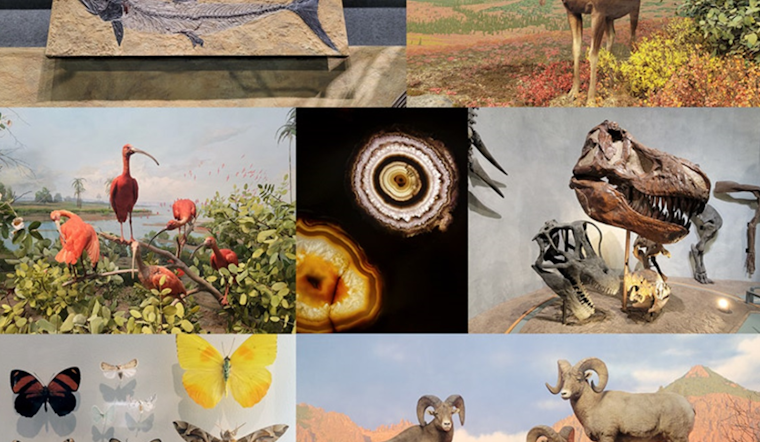
The Denver Museum of Nature & Science, with its treasure trove of over 4.3 million items, has acknowledged gaping holes in its inventory management and emergency preparedness systems. This acknowledgment came following a recent audit by Denver Auditor Timothy M. O'Brien, who stated, "Museum leaders welcomed our audit and gave us complete access to fully understand how they could improve their stewardship of scientific, cultural, and historical items." According to the Denver Auditor´s Office, the institution is now set to revamp its protocols to better safeguard its vast and valuable collections.
In a detailed blossoming of concerns, the audit revealed the lack of sufficient procedures to conduct full inventory checks and a dearth of formal training among staff and volunteers regarding inventory management. O'Brien remarked, "The museum has high-value, irreplaceable items in its care. It also has lower-value but scientifically relevant items, like donated jars of spiders." as per the Denver Auditor´s Office. Nonetheless, a staggering 2.1 million unprocessed items lay in backlog purgatory as of the end of 2022. Despite the museum leadership asserting no known thefts, the audit poses an uncomfortable question: without a robust inventory, can the museum effectively mitigate theft and properly protect its items?
Additionally, the accountability of loaned items emerged as a subject of concern. For example, a zoological sample inquired about during the audit was lost in the chasm of antiquated paper trails, with records revealing it had been transferred to another museum in 1914, a baffling 110 years ago. The audit underscores the need for museums to ensure that loaned items, whether in-house or distributed, are adequately safeguarded, complete with ironclad documentation tracking each artifact's journey.
Emergency preparedness was another weak link in the museum's armor. In what seems like an irony straight out of a disaster movie, there was no explicit ranking of priority items to salvage in a calamity. O'Brien's audit indicated a need for "a clear and obvious priority list" so that both staff and first responders know which treasures to snatch in the nick of time, as noted by the Denver Auditor´s Office. In the convoluted world of managing millions of cultural and scientific jewels, this sort of planning is not just prudent, it's critical.
The museum is not just mired in operational challenges, it is also wrestling with governance issues. The operating agreement between the city and the museum, which hasn't seen revision since flappers were in vogue, lacks clarity on reporting protocols about non-monetary gifts and donations. Additionally, the Denver Museum of Nature & Science's board begs for a dash more diversity and industry know-how.
All this unfolds as the museum gears up for its reaccreditation with the American Alliance of Museums in 2025, a process that will cast a spotlight on the museum's ability to straighten its backbone and align its processes with industry best practices. Implementing all 35 recommendations from the audit remains a tall order, but one that museum leaders have committed to fulfilling. As O'Brien optimistically notes, "They have shown their intent by proactively asking for more information about best practices, now I look forward to seeing their action," as obtained by Denver Auditor´s Office.




