

























































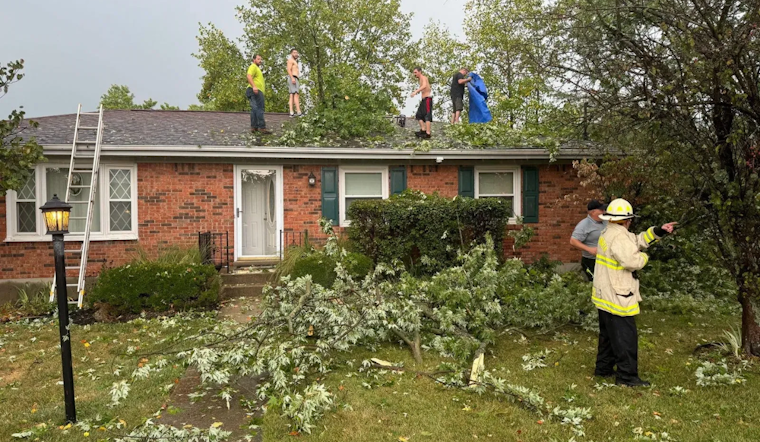
Residents of Campbell County were in for a rude awakening when severe weather swept through the region, leaving a trail of destruction in its wake. However, as residents began to emerge from their homes to survey the aftermath, initial speculations of a tornado were dispelled. Instead, LOCAL12 News reports that the National Weather Service (NWS) determined the culprit to be a microburst, a volatile weather phenomenon characterized by a sudden and powerful downward rush of air. The microburst struck with winds estimated to be cruising at 60-70 mph shortly after 5:30 p.m., enough to forcefully dismantle the serenity of Backus Drive in the Alexandria area.
A microburst, experts explain, is a localized column of sinking air within a thunderstorm, born from the tumultuous marriage of rain-drenched downdrafts and chilled air. When the storm's updraft is quickly choked off, the thunderstorm collapses rapidly, resulting in the microburst's destructive visitation. According to WLWT, this natural force tore through the environment of northern Kentucky at approximately 5:39 p.m., toppling trees that had likely stood watch over the neighborhood for decades. Thankfully, Campbell County's Office of Emergency Management confirmed that no individuals were injured amidst this chaos.
In the event's aftermath, the streets within the Greater Cincinnati suburb bear evidence of the storm's brief yet intense assault. The fallen trees, a clear sign of nature's impulsive might, remind a community of the sudden violence that a microburst can bring. It was explained that once rooted and unyielding, these trees were uprooted as the storm's force swept through the residential landscapes, a powerful testimony to the microburst's brief but firm grasp.
This incident underlines the often underestimated power of microbursts as agents of swift destruction. The NWS, by analyzing the pattern and scope of the damage, was able to piece together the narrative of the storm's impact, reaffirming their estimate of the wind speeds that brought trees down to rest on homes and sprawl across the suburban streets. Residents are now faced with the task to quickly but carefully pick up the pieces, their lives upended with little warning by an unwelcome gust that sought to reshape their daily landscape.





