

























































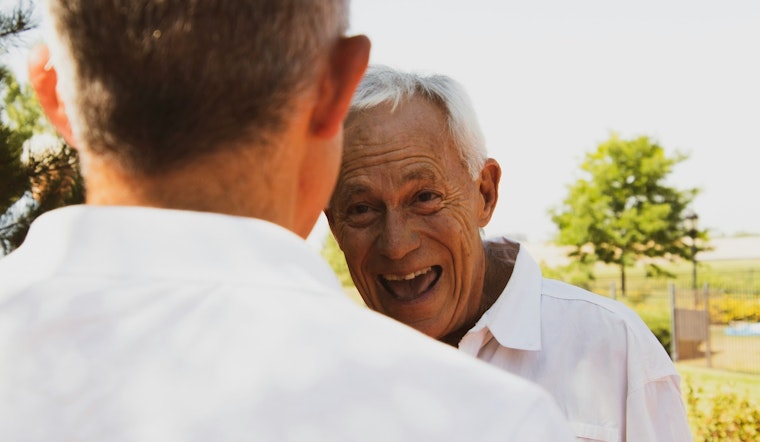
There's a straightforward message for those worried about the wellbeing of older folks: regular, in-person hangouts might be a game-changer for staving off loneliness. This bit of wisdom comes courtesy of researchers from The University of Texas at Austin and the University of Michigan, who have uncovered the distinct value of in-the-flesh social interactions among seniors. In a study published yesterday in The Journals of Gerontology: Series B Psychological Science, the findings emphasize a pretty clear-cut takeaway: face-to-face time beats tech-based chit-chat when it comes to alleviating feelings of isolation in our elders.
"We were interested to see how older adults react when they are lonely and the effects that different types of social contact had on that loneliness," said Shiyang Zhang, UT postdoctoral fellow and co-author of the study. Surprisingly, even though a chat over the phone, or a digital message might seem like a solid lifeline for someone feeling lonely, these methods don't quite measure up to a good old-fashioned visit. According to the University of Texas at Austin, Zhang points out that while older adults often turn to the phone when feeling isolated, "in-person visits were the only type of contact that actually decreased levels of reported loneliness."
The study tracked over 300 participants aged 65 and above in the Austin, Texas area, monitoring them across a couple of years that, crucially, pre-dated the COVID-19 pandemic - a time that would later see a boom in digital communication. Participants provided feedback on their feelings of loneliness at various points during the day, specifying the nature of any social interaction that took place, whether it was in person, a phone call, or through digital means like texting or social media.
What's interesting is the discovery that the strength of social ties doesn't necessarily predict how much loneliness is eased; the manner of interaction does. Zhang noted, "It turns out that in-person contact — even with someone with whom they had only weak ties, such as an acquaintance — was predictive of lower levels of loneliness better than, say, a phone call with a family member or friend with whom ties were stronger." So, while physical barriers and health issues might make face-to-face interactions a tough order for some seniors, the research implies it's a worthwhile effort not only for the individuals but potentially as a broader public health endeavor.
In an age where tech offers ease and immediacy in staying connected, it turns out there's no real digital substitute for human presence, especially for the older demographic. While a phone or internet connection brings undeniable benefits, "Phone and digital contact do not provide older adults with the same emotional closeness and comfort as in-person contact. It’s just not a substitute," Zhang asserted. Along with colleagues Karen Fingerman, Zexi Zhou, and Kira S. Birditt, the research aims to shed light on how key a role in-person interaction plays in the health and longevity of older adults - a demographic that, all too often, contends with the silent adversary of loneliness.





