

























































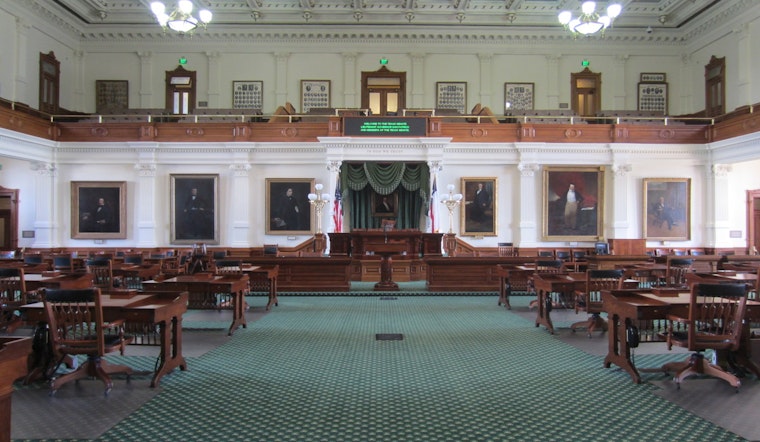
The Texas Senate Business and Commerce Committee has commenced efforts to navigate the intricate terrain of artificial intelligence (AI), exploring potential frameworks for regulation. During a session spanning almost four hours, the committee engaged with various concerns about AI, ranging from misinformation proliferation to consumer privacy intrusions. "If you really think about it, it's a dystopian world we could live in," said Sen. Lois Kolkhorst, R-Brenham, underscoring the importance of safeguarding against the potential risks associated with these technologies, according to the Texas Tribune.
A patchwork of state and federal attempts have sought to check AI technology's expansion, with varying degrees of success. Some lawmakers within the committee appeared to readily agree that the state needs to rapidly act to regulate the ways private companies use AI. They seem to also tacitly acknowledge the challenge surrounding how to craft legislation that doesn't stifle the positive uses of artificial intelligence while trying to clamp down on its possible harms. "You almost have to look at it industry by industry," expressed Renzo Soto, an executive director of TechNet, advising a cautious, tailored approach, per Texas Tribune.
Specifically, in terms of the arts, Texas has been lagging behind other states in protecting its cultural output from the specter of AI fakes. Country musician Josh Abbott has become an outspoken proponent for safeguarding artists' rights against AI-generated content that might use their names or mimic their voices without consent. "Somebody could go out, record a song, put my name on it, have an AI-generated version of my voice and perhaps my band, and it misrepresent our band," Abbott disclosed concern in an interview with Nexstar’s KXAN. This encapsulates fears among artists that AI could unfairly capitalize on their brand without providing due recognition or remuneration.
Abbott's fears are validated by moves in other states aimed to reinforce artist protections. For instance, the "ELVIS" Act, put into law by Tennessee Governor Bill Lee, specifically includes "voice" in the scope of protected likeness. On the national level, the "No Artificial Intelligence Fake Replicas and Unauthorized Duplications Act, or No AI FRAUD Act," introduced by Rep. Maria Salazar, R-Florida, has garnered bipartisan support, as it declares that individuals retain property rights to their likeness and voice. "Your voice is your brand, your skills are your brand. Your name, your image, your likeness, we have a duty to protect those things," Abbott stressed, placing a significant emphasis on the cultural and economic significance of safeguarding Texas artists, a sentiment reported by KXAN.
Despite its rapidly burgeoning AI industry and the prevalent use of AI across more than 100 state agencies, as reported by the Texas Department of Information Resources to lawmakers, Texas will not be taking legislative action on AI regulations until its next legislative session in 2025. The delay presents a critical window where artists like Abbott could remain vulnerable to AI impersonations, deepfakes, and potentially, a loss of control over their voice and image in the music industry.





_-_084.jpg)