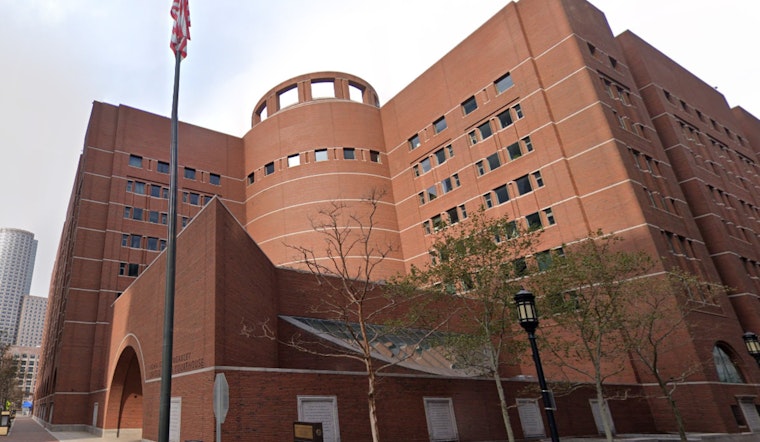
A Brockton man, identified as Antonio Denziah Fernandes, has entered a guilty plea before a federal court in Boston for multiple charges, including handling firearms illegally, drug distribution, and conspiracy. The 23-year-old admitted to two counts related to firearms, fentanyl distribution, cocaine possession, and conspiracy, according to a press release from the U.S. Attorney's Office.
Initially indicted in September 2023, Fernandes received additional charges on September 11, 2024. Under indictment on a state level for trafficking fentanyl, he still managed to sell a firearm—a 9mm pistol—and approximately 100 grams of fentanyl from his Brockton vicinity. The van parked outside his residence, used to package the drugs, was discovered with large quantities of narcotics and ammunition by law enforcement.
During his arrest, a loaded firearm was retrieved wedged against his seat in the vehicle in which he was a passenger. Subsequent charges include distributing and possessing the intent to distribute fentanyl—amounts exceeding 40 grams—and conspiracy to distribute high amounts of the same drug. Judge Indira Talwani has scheduled his sentencing for December 10, 2024.
The case unfolds as a part of Project Safe Neighborhoods, an initiative aimed at lowering gun violence and improving the safety of neighborhoods through a collaboration of law enforcement levels and the communities they represent. James M. Ferguson, the Special Agent in Charge of the ATF's Boston Field Division, announced the case's impact in a joint statement with Acting United States Attorney Joshua S. Levy, underscoring the program's commitment to reducing violent crime. Assist coming from various Massachusetts police departments and district attorney's offices was acknowledged in their statement.
Fernandes is facing up to five years in prison for the illegal receipt of a firearm while under indictment. This was laid out alongside the more grave penalty of a potential 40-year prison sentence, lifetime supervised release, and a $5 million fine for the drug-related offenses. Sentencing will consider U.S. Sentencing Guidelines and other statutory factors.