

























































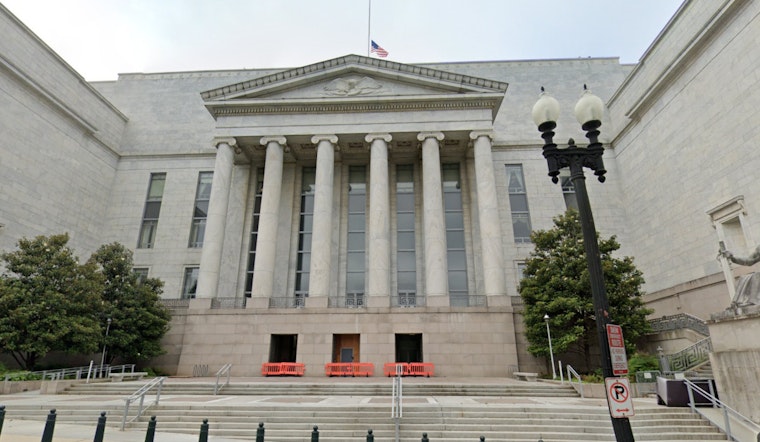
The House Judiciary Committee, along with its Subcommittee on Immigration Integrity, Security, and Enforcement, released an interim report today scrutinizing the immigration policies of the Biden-Harris Administration in relation to a recent incident involving illegal aliens from Venezuela and an ensuing attack on New York City police officers. According to the committee's press release, this attack can be traced back to the administration's border policies.
On January 27, near a migrant shelter in Times Square, a group of illegal aliens was involved in the attack on two New York City police officers. The suspects, identified as Darwin Gomez Izquiel, Wilson Juarez-Aguilarte, Kelvin Servita Arocha, and Yorman Yoel Riveron-Rivero, entered the United States under circumstances facilitated by what the committee labels as open-border policies. After pleading to the Manhattan District Attorney, a deal was struck with Gomez Izquiel. With a watchful eye over these events, Kamala Harris has been implicated by the committee as sharing in the responsibility for their occurrence.
Amidst the ongoing debate over immigration policies in the United States, this incident has heightened scrutiny of the administration's approach to border control. The committee's report links the assault directly to the Biden-Harris Administration's handling of immigration, claiming "The disastrous immigration policies of the Biden-Harris Administration have had real world consequences for American citizens," as per committee's press release.
The report further alleges that "criminal aliens" are now in American neighborhoods, with the implicit suggestion that they harm families and pose a threat to public safety across the country. While the interim report does not delve into the specifics of the administration's policies, it infers a direct causality between policy decisions and isolated criminal acts, an analysis that remains contentious among policy experts and immigration advocates. Critics of the committee's perspective argue that such assessments might oversimplify a complex issue and attribute actions of individuals to broader policy in an overly deterministic manner.
As the debate over immigration policies continues, incidents such as the Times Square assault inevitably become part of a larger narrative used by both sides to argue for stricter or more lenient border controls. The discussion remains a vital one for the shaping of future immigration policy and the safety and well-being of communities across the nation.





