

























































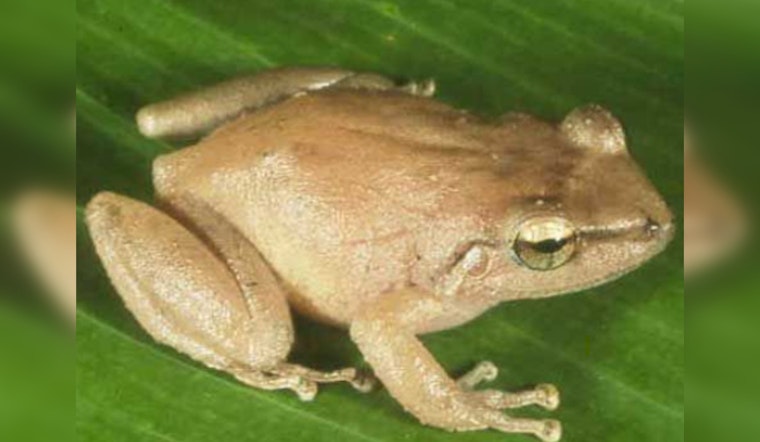
A rather peculiar high-altitude noise on Oʻahu has been pinpointed as the call of invasive coqui frogs, which have now been detected up in the mountains at elevations previously unaffected. The Department of Agriculture made this discovery known in June, after a hiker reported the notorious chirp of the coqui roughly 200 meters below the Kuliʻouʻou Ridge Trail summit, found on the island's leeward side. According to a report by the Department of Land and Natural Resources Division of Forestry and Wildlife (DOFAW) and the Oʻahu Invasive Species Committee (OISC), there's an estimated 13-acre infestation of these noisy amphibians.
The situation comes with unique challenges—you can count the remote location, practically impenetrable slopes, and erratic weather among them, making traditional ground methods, like hose-based spray systems, unusable here. These constraints have driven Division of Forestry and Wildlife to switch tactics, as they're now planning to deploy drone technology to distribute a non-toxic citric solution—a staple in controlling the invasive frog population. A Hilo-based company specializing in agricultural and environmental drones, Aloha ʻĀina Drones, has been brought on board to implement this high-tech solution, as mentioned in the Department of Land and Natural Resources announcement.
The invasive coqui frogs are notorious for their ecology-disrupting antics, not just for their piercing calls that disturb the island's residents. In Hawaii, these amphibians reach population densities far greater than in they native Puerto Rico, impacting local ecosystems—particularly, preying heavily on native insect communities. Reports have stated that these frogs have already become a common nuisance on Hawaiʻi Island and are subjected to rigorous control efforts in parts of Kauaʻi, Oʻahu, and Maui.
Oʻahu Invasive Species Committee and Division of Forestry and Wildlife are taking preventative measures to stop the spread to lower elevations on the leeward side of the Koʻolau Mountains. Kuliʻouʻou locals and visitors to the ridge and valley trails have been urged to keep their ears peeled for the distinctive call of the frogs. Community members can submit pest reports via 643pest.org or by calling the 643-PEST hotline. Additionally, staff from both departments are scheduled to attend the October 2, meeting of the Kuliʻouʻou Neighborhood Board, purposed to inform and field questions regarding the ongoing battle against the coqui invasion, as indicated in Department of Land and Natural Resources's recent announcement.





