

























































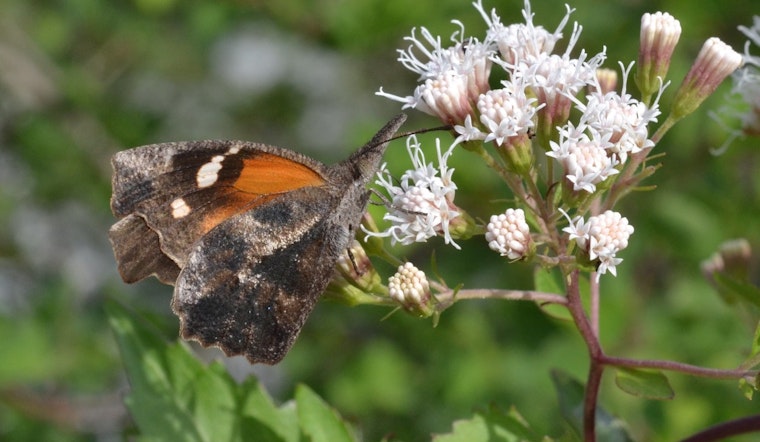
If you've stumbled upon a fluttering frenzy during your San Antonio outings, rest assured, you've witnessed the American Snout butterfly show. This local spectacle, a consequence of the weather's whimsy, is as transient as it is widespread. Described by Terri Matiella, a lecturer at UTSA’s Department of Environmental Science and Ecology, as having a "brownish yellow color" and a distinguishable long snout, these butterflies are taking center city by storm following the recent heavy rains. Matiella informed KENS 5 that the damp conditions subsequently accelerated the growth of their primary sustenance, hackberry plants, triggering a butterfly boom.
Bexar County's own entomologist with the Texas A&M AgriLife Extension Service, Molly Keck, echoed this sentiment, attributing the proliferation to recent rainfall that nurtured the hackberry foliage. While professing the butterflies' innocuity, Keck also touched upon their crucial ecological role. "Their favorite food source — and their main food source — is hackberry,” Keck told Texas Public Radio, highlighting their part as pollinators and as a dietary component for local fauna.
Despite their vast numbers, the American Snout is not an endangered species, and they are not pests according to experts. They do, however, leave a noticeable mark on vehicles that may have crossed paths with their swarm. Keck noted that the effect on their population due to these collisions is minimal and thus not a cause for ecological concern. Yet, for motorists concerned about their paint jobs, the residue left by the butterflies may prove more problematic, potentially staining cars if not cleaned promptly.
Visually similar to the more renowned Monarch but distinct in their migratory habits, as noted by Matiella, these butterflies display a unique non-directional movement. "They're kind of just flying around,” Keck observed when discussing their patterns. Not a true migration but an instinctive search for sustenance and reproduction, driving them down the I-35 corridor with no final destination in sight. This great exodus begins a little north of San Antonio, ultimately descending through the conduit that connects wildlife and urbanity, according to Texas Public Radio.
For those seeking to witness this ephemeral and pervasive butterfly boom, the opportunity is as brief as it is spectacular. Spanning just a few weeks of life, the Snout butterflies remind us of the fleeting interplay between life, nature, and the environment.





