

























































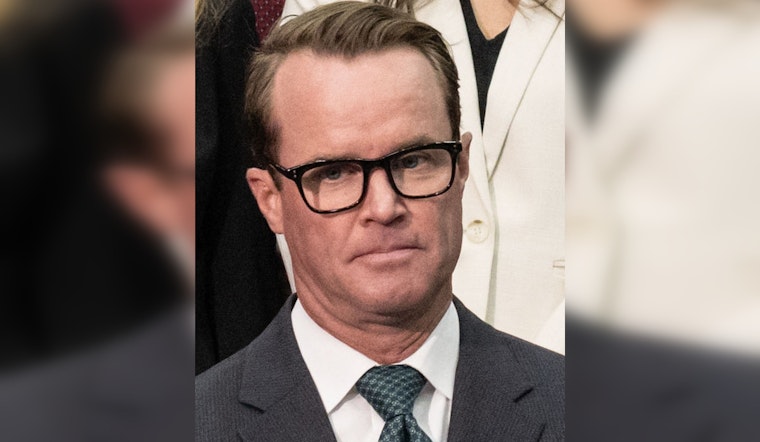
As the race for speaker of the Texas House narrows, incumbent Dade Phelan is up against the wall. A report from KSAT details a tumultuous political struggle with Beaumont Republican Dade Phelan, who's managed to hold the gavel since 2021, opposite his challenger, Rep. David Cook of Mansfield. Following a key private meeting earlier this month, a group of House Republicans expressed their discontent, pivoting their support to Cook — 48 in total. With the specter of November elections looming, these commit come with the implication that a majority of House Republicans don’t back Phelan for another term.
While Phelan confidently claims he has the necessary support to get reelected, according to Houston Chronicle, this assertion isn't without contention. The Chronicle illustrates two pathways for Phelan: winning three-fifths of the GOP caucus vote or securing the House floor vote with a minority of Republican representatives and most of the Democratic representatives' support. Despite his recent primary scare, Phelan holds the fort due to strong district ties, influential endorsements, and significant financial backing. He narrowly salvaged his political fate by 366 votes, a margin so fine that observers could not help but to keenly scrutinize his outreach to moderate Republicans, independents, and Democrats.
On the flip side, Cook's claim to the speakership hinges on swaying those within the Texas House Republican Caucus to his side. Under current bylaws, he would need at least three-fifths caucus support to secure the "endorsed speaker candidate" title, which presumes the number of members in support to be in the mid-50s. Cook's endorsement list is heavily comprised of party members critical of Phelan's bipartisan leadership approach, particularly the practice of assigning committee chairmanships to Democrats. "The process of selecting a speaker of the House should always be done with a high standard of due diligence and should never be taken lightly," Rep. Matt Shaheen told KSAT, a Cook supporter, emphasizing his conviction in Cook's leadership.
Yet the incumbent speaker isn't bereft of machinations to maintain his hold on power. Cook's intentions to avoid seeking Democratic votes complicate his path to the needed majority. Phelan, unburdened by such commitments, has historically drawn support from across the aisle by continued bipartisanship, akin to the pragmatic approach taken previously by Joe Straus in 2009. Despite looming partisan rifts, a strategic Phelan might, according to the Houston Chronicle, be able to pursue more flexibility to pass priority conservative legislation should he win through the Republican Caucus, rather than forming an explicit coalition with Democrats.
As it stands, the ongoing saga is a dance of political allegiances and strategy. With Republicans anticipating to back their nominee in January and the Democratic wildcard in play, both Phelan and Cook must navigate a political tightrope in their battle for the Texas House's top spot. While Phelan is bolstered by allies and a notable electoral escape, Cook relies on party unity and a sturdy band of 48 proponents. The next speaker of the Texas House remains a question of loyalty, strategy, and numbers as these lawmakers plot their courses toward the 2025 legislative session.





.jpg)