

























































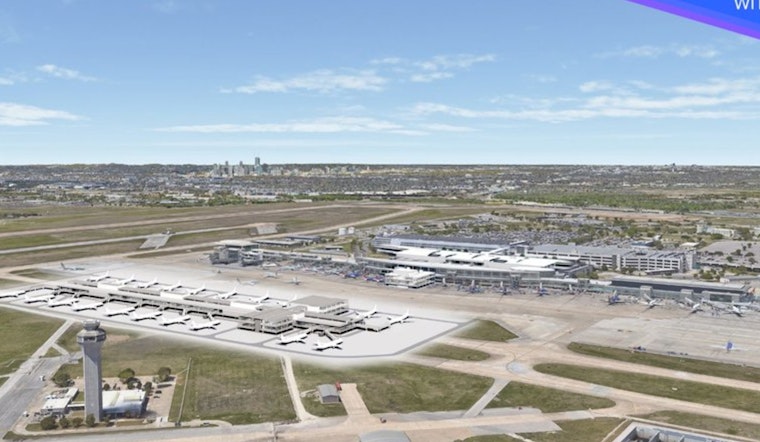
Austin's aviation landscape is gearing up for a significant lift. In a funding boost announced Thursday, the Austin-Bergstrom International Airport's (AUS) expansion plan has been graced with a substantial federal investment. A total of $33.27 million from the Biden administration's Bipartisan Infrastructure Law has been allocated to the airport by the Federal Aviation Administration, according to CBS Austin.
We are proud to invest in a better passenger experience thanks in part to a $33.27 million @FAANews Bipartisan Infrastructure Law grant award. This funding will support the construction of the airport’s new #JourneyWithAUS Concourse B project. Learn more: https://t.co/tFURT2xLry pic.twitter.com/ibIb2xr8uY
— Austin-Bergstrom International Airport (@AUStinAirport) October 24, 2024
The monetary infusion will underpin construction efforts of the new Concourse B, and the 518-foot tunnel expected to bridge it to the existing Barbara Jordan Terminal. Congressman Greg Casar (D-Texas) chimed in, highlighting the potential perks for travelers: "More gates and flights means cheaper fares and shorter wait times for Austinites," he told CBS Austin. This expansion is not just a facelift but a crucial upgrade for an airport, that has recently surpassed 20 million annual passengers.
Delving into the project's specifics, KXAN outlines the project timeline with the major construction work slated to start in 2027 and the potential launch of Concourse B by 2030. Moreover, this federal funding award adds to the FAA’s Airport Terminal Program contributions, which now total over $47 million for Concourse B.
AUS CEO Ghizlane Badawi spoke to the importance of this financial backing, emphasizing the broader vision for the airport, "This funding will aid us in delivering a bigger, better AUS that will be able to meet the air service needs of generations to come," Badawi told KXAN. In conjunction, with the work on the new Concourse B, the airport is also looking towards incorporating a future light rail access to further enhance traveler connectivity.
The airport expansion, pegged at $4 billion, is a part of a modernization agenda that includes a new arrivals and departures hall, as greenlit by the Austin City Council. Funding sources for the project are diverse, comprising airport revenues, cash reserves, airport revenue bonds,, and federal grants, with no local tax dollars being dipped into as per airport authorities.





