

























































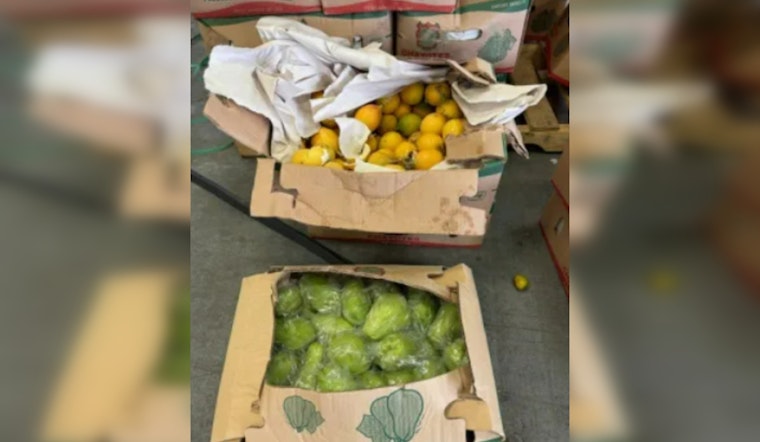
At the Pharr International Bridge cargo facility, U.S. Customs and Border Protection officers seized over 14,000 pounds of prohibited fresh hog plum and passion fruit, as reported by a recent release from the agency. The interception is considered significant in the context of safeguarding American agricultural interests. Arriving from Mexico, a tractor-trailer was referred for a thorough inspection, revealing a discrepancy between the goods declared and the actual contents.
Upon discovery, the fruits were wrapped in paper and secreted inside enclosed boxes, implying an attempt to evade detection; CBP officers had been told to expect fresh lime and chayote but found quite a different cargo in the concealed produce. Utilizing non-intrusive inspection (NII) equipment and a canine team, the CBP subjected the vehicle to additional scrutiny. According to CBP’s official statement, Port Director Carlos Rodriguez stressed the essentials of their mission, which also includes shielding American agriculture from harmful pests and diseases, beyond just intercepting narcotics.
Officers at the bridge identified the suspicious shipment for review, and subsequently, CBP agriculture specialists sent samples to the U.S. Department of Agriculture (USDA) for identification. Affirmed by the USDA, the shipment contained the prohibited fruit varieties that could potentially carry pests like fruit flies, posing a serious risk to the U.S. agricultural landscape. These insects can have devastating effects on domestic crops and, by extension, the economy at large.
Following the identification, CBP OFO seized the fresh fruit to be destroyed, underscoring the risks associated with importing unapproved agricultural commodities. Along with the seizure, the carrier faced a $5,000 penalty for failing to accurately declare the contents of the shipment, thus ensuring accountability for the misrepresentation of the imported goods. As detailed in CBP’s release, the USDA's Investigative and Enforcement Services has initiated a follow-up investigation into the prohibited shipment to maintain the integrity of food safety and agroeconomic security.





