

























































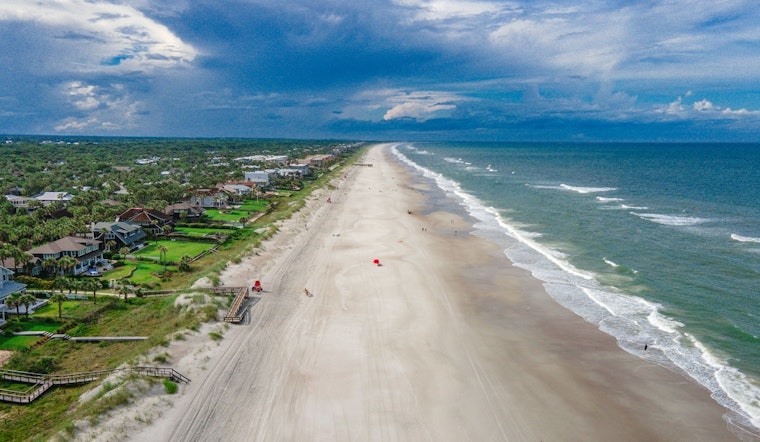
Residents and visitors along the Northeast Florida beaches are advised to exercise caution as the National Weather Service (NWS) in Jacksonville issues a High Rip Current Risk and Coastal Flood Advisory in effect through late Saturday night and Sunday afternoon respectively. According to the latest update from the NWS, hazardous conditions with dangerous rip currents and minor coastal flooding are expected in the areas of Coastal Nassau, Coastal Duval, Coastal St. Johns, and Coastal Flagler.
The NWS statement warns of possible impacts including the flooding of lots, parks, and roads with some potential for isolated road closures. It emphasizes the ability of rip currents to sweep away even experienced swimmers. For those needing to travel, the NWS suggests that extra time be allocated as certain roads might be closed, and further advises not to drive around barricades or through the water when the depth is uncertain and people heading to the beach are urged to swim near a lifeguard and, if caught in a rip current, to "relax and float," without swimming against the current.
Today's forecast in Jacksonville predicts sunny skies with a high near 68, and north winds of 10 to 14 mph, gusting as high as 21 mph, providing a brief respite from the impending coastal threat. The weekend outlook, however, calls for a 20 percent chance of showers late Saturday night and a continued breeze making beach and coastal activities potentially hazardous.
The advisory stands until 2 PM EDT on Sunday, and the NWS stresses taking necessary actions to protect flood-prone property, recommending to swim in a direction following the shoreline if possible and if unable to escape the rip current, to face the shore and call or wave for help, outlining specific risks and precautions for those in the affected regions; residents and visitors should remain vigilant and stay informed on the latest weather conditions.





