

























































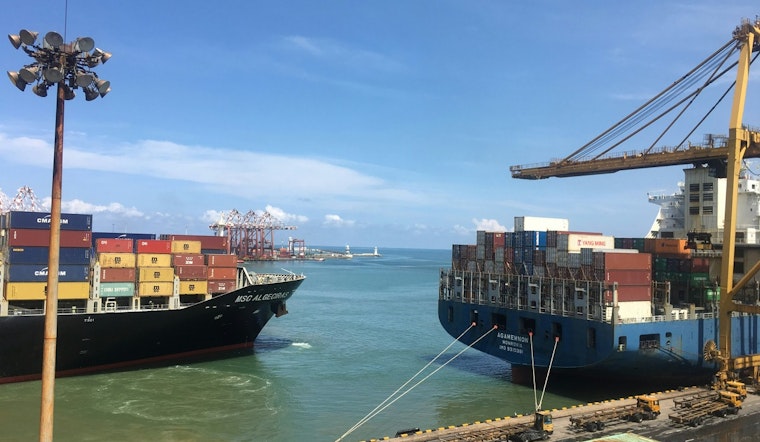
Dockworkers from the International Longshoremen's Association (ILA) have launched a widespread strike at ports along the East and Gulf Coasts, including a major stoppage at Conley Terminal in Boston, possibly setting off a chain reaction that could stifle the Massachusetts economy and beyond. The strike commenced early Tuesday and has put a halt to operations at 36 ports stretching from Maine to Texas, as confirmed by a report from Boston 25 News.
As the ports brace for an operational shutdown, Massport has sounded the alarm over potential cargo pile-ups which could ensue from the unavailability of workers to unload and distribute arriving shipments, with NBC Boston estimating the strike could ding the economy by $5 billion daily, if workers do not return to the job, prices could see a rise on common imports such as fruits, chocolate, coffee, and alcohol among other products, Josh Stillwagon, the chair of economics at Babson College indicated concerns about impacts on industries reliant on imported parts, which could see shortages causing potential recessions and hesitations from the Federal Reserve on interest rates. It has been nearly half a century since the ILA engaged in a strike of this magnitude, pointing to unresolved issues over wage increases and the encroaching tide of automation in their industry.
According to NBC Boston, the ILA is pushing back against proposals from the United States Maritime Alliance (USMX) which they believe inadequately compensates them in the face of billion-dollar profits reaped by ocean carriers and fails to protect against job risks posed by automation; Bernie O'Donnell, ILA VP for the New England area, told NBC Boston, "We’re just looking for a fair contract and we’re fighting automation, It’s pretty simple, we’re just looking for a good contract and we’ll be here as long as it takes to win that battle.” USMX, representing carriers, terminal operators, and port associations, contended that, through their offers, wages would nearly increase by 50%, with strengthened retirement and healthcare plans while retaining current arrangements around automation and semi-automation.
The implications for Boston and broader regional supply chains have been profound, with MassPort urging customers to retrieve import cargo swiftly since availability might be constrained until the strike's resolution, and refrigerated cargo remaining unchecked as expressed by Boston.com. On the negotiation front, USMX has noted that offers continue to be exchanged and had sought an extension of the current contract, hoping for a return to collective bargaining, as deputy director USMX explain "We are hopeful that this could allow us to fully resume collective bargaining around the other outstanding issues – in an effort to reach an agreement," the ILA demanded a 77% wage increase, juxtaposing their $39 hourly wage after six years on the job, starkly contrasting their West Coast counterparts' earnings of $55.85, CBS News detailed such discrepancies which are slated to rise in the upcoming years.
The strike's duration poses a critical risk to the interconnected web of American commerce, with predictions from Anderson Economic Group citing a potential $2.1 billion loss for just a one-week strike, in addition to rippling disruptions for retailers and manufacturers, per Business Roundtable's CEO Joshua Bolten who alerted on Friday, “A port strike could cost the U.S. economy billions of dollars a day, hurting American businesses, workers and consumers across the country," while advising both negotiation parties to reach a timely agreement ahead of Monday's looming deadline as stated in the Boston.com report.





