

























































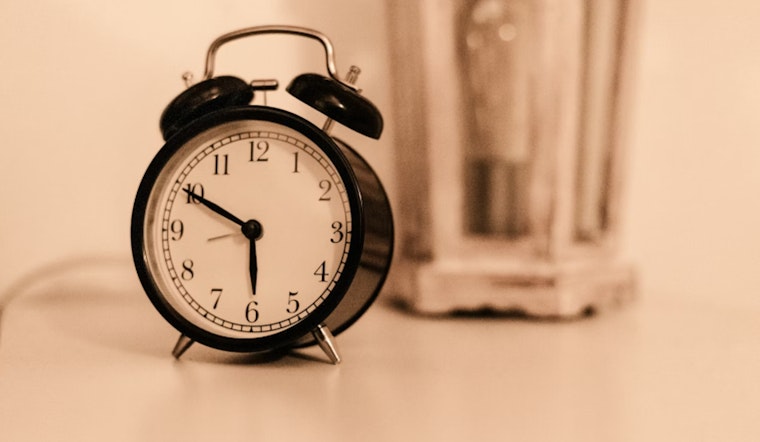
As the page on the calendar turns to November, San Antonio residents and many others across the United States are preparing to set their clocks back with the end of Daylight Saving Time. This annual ritual will see clocks turned back one hour at 2 a.m. on Sunday, Nov. 3, affording people a perceived extra hour of sleep, but also thrusting them into earlier nights. According to KSAT, the sunset will shift from 6:46 p.m. on Saturday to 5:45 p.m. on Sunday after the time change, noticeably shortening the evening daylight hours.
The transition, while seemingly simple, often brings about a disruption in sleep patterns. To better to adjust, Dr. Brian Chen of the Cleveland Clinic recommends "stick to your bedtime routine," a sentiment echoed by sleep experts and FOX Weather. The clock change is also a call to action for parents, who have to ensure their children's sleep schedules are minimally affected. According to "Moms on Call," a group cited by FOX Weather, this adjustment could take up to three days.
Daylight Saving Time, governed by the U.S. Department of Transportation since 1966, remains a hotly debated topic. While most places in the U.S. adhere to the time shift, states like Hawaii and most of Arizona do not, while the Navajo Nation in Arizona does, adding to the complexity. Territories such as Puerto Rico and the Virgin Islands also bypass the biannual clock changes.
Legislative efforts, specifically through the Sunshine Protection Act, have sought to make Daylight Saving Time permanent, although these initiatives have yet to see success. "There have been several attempts to make daylight saving time the year-round standard through the Sunshine Protection Act," as FOX Weather reports. For now, the back-and-forth dance with time continues, readying to sway us out of Daylight Saving Time for another season, towards the shorter days culminating with the Winter Solstice on Dec. 21, as pointed out by KSAT's meteorologists.



