

























































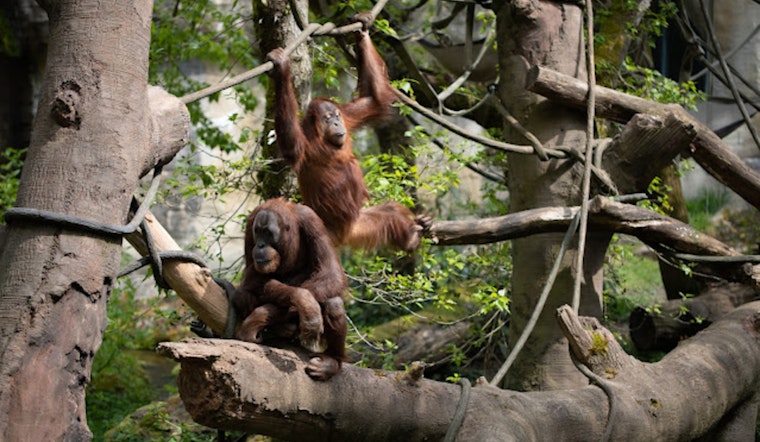
Anticipation is brewing at Woodland Park Zoo as Batu, the 14-year-old Sumatran orangutan, is prepped to thoroughly shake up the nursery for the first time in 35 years. The soon-to-be primate mother is deep in the throes of her nine-month pregnancy, with a birth window you might call broad, given that pinpointing the exact moment when a baby orangutan decides to enter the world is a bit like trying to guess the lottery numbers.
Still, the zookeepers and veterinary staff are doing their darndest to ensure everything goes smoothly. They've got Batu under a 24-hour watch, which is exactly as intensive as it sounds. Imagine being so close to your delivery date that every wiggle and kick is under a microscope—except, in this case, it's monitored by ultrasounds as vet staff are hoping to catch every detail of the fetal development. It's high stakes, high stress, and all the more challenging because it's fundamentally at the whim of Batu's cooperation or lack thereof.
The expectation game at the zoo is based on some serious science—and a bit of well-educated guesswork—tracking signs such as estrus cycles, physical changes including weight gain, and the less-than-romantic memory of when Batu and the first-time father-to-be, Godek, got busy, as detailed in a blog post by the Woodland Park Zoo. Dr. Tim Storms, the zoo's Director of Animal Health, has been wading through these murky waters, stating on the Zoo's blog that "recent ultrasound images indicate Batu is near-term and the fetus appears to be developing well with a normal heartbeat."
The team's commitment doesn't stop at just playing the waiting game; there's a whole birth management plan in place, complete with prenatal and postnatal care. Batu's been on a special diet cooked up by a nutritionist—no, not the kind that advises a pre-birth juice cleanse—and dosed with vitamins designed to keep her in tiptop shape for D-day. To minimize the stress of birth for Batu, the plan includes her choice of voluntary, non-invasive ultrasound procedures which, as Storms briefly mentioned, rely heavily on Batu's participation.
Now let’s talk about the stakes: orangutans are critically endangered, with deforestation and illegal hunting decimating their populations. They're a vital link to understanding our branch on the evolutionary tree, and every birth in captivity is a beacon of hope for the conservation efforts—a point that Woodland Park Zoo doesn't take lightly, considering the extensive maternal skills training given to Batu to tilt the odds of success in her favor as shared by the Zoo's blog.
Parenting for orangutans is a long-haul contract, what with infants clinging to their moms for a hefty three to four years, which makes the birth of Batu's baby a significant event not just for the zoo but for the species. The zoo is bustling with orangutans, including Batu and Godek’s cohabitation and another pair, Heran, and Belawan, living it up in their slice of the habitat. Fans of these great apes are keeping their fingers crossed; after all, with a birth rate of every seven to nine years, it's not like orangutans are flooding the delivery rooms.
As Woodland Park Zoo holds its breath for the new arrival, the fact remains starkly clear: every new orangutan life is a step away from the edge of extinction for these majestic creatures, and with all eyes on Batu, it’s more than just another day at the zoo—it's a silent cheer for survival.





