

























































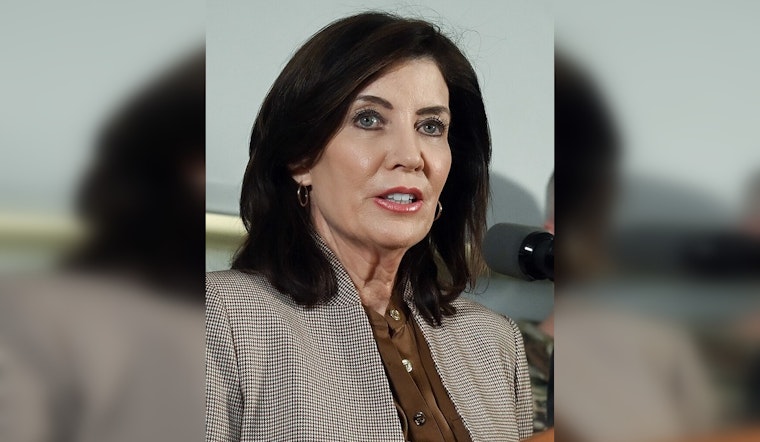
Today, New York's Governor Kathy Hochul is slated to detail a revised congestion pricing framework for Lower Manhattan, setting the stage for the policy's resurgence after facing a delay earlier this year. As reported by PIX11, sources close to the matter indicate the proposed base fare will now be $9, a drop from the initial $15 though it is expected to climb gradually over time.
Following concerns about economic repercussions in the aftermath of the COVID-19 pandemic, the execution of the plan was postponed in June. However, Governor Hochul is now renewing the push for congestion pricing, notably in response to President-elect Donald Trump's statement on TruthSocial to "TERMINATE Congestion Pricing in my FIRST WEEK back in Office," as detailed by PIX11. The reimagined strategy is set to be unveiled just a day before a court challenge regarding the previous postponement. According to ABC7NY, Governor Hochul has also promised to outline alternative sources of revenue to offset the deficit arising from the reduced base fare.
While details regarding the full cost implications of unpausing the plan have been withheld, earlier statements from Governor Hochul suggested the possibility of lowering the toll from $15 to $9 for motorists driving into Manhattan below 60th Street. Mayor Eric Adams has expressed support alongside various environmental and transit advocacy groups, with the latter eagerly awaiting further announcement from Hochul's office concerning this financial mechanism aimed to unclog city streets and ameliorate public health by curtailing air pollution.
In addition to the scaled-down base fares, other adjustments to the original pricing structure include reduced off-peak rates and "crossing credits", and scaled-down surcharges for taxis and ride-share services, which the MTA board is anticipated to assess at a meeting on Nov 18, all of this happening while opponents and supporters of the initiative have waged legal battles, and Staten Island officials spearheaded by City Councilmember Kamillah Hanks challenge the fairness of congestion pricing relative to perceived benefits for their constituents.
The proposed reimplementation of congestion pricing bears significant fiscal implications for New York's Metropolitan Transportation Authority (MTA), with earlier estimates pegging the revenue to fund upwards of $15 billion in capital improvements across the city's transportation networks. These improvements are regarded as instrumental in rejuvenating a transit system still grappling with the aftermath of pandemic-induced disruptions and could help bolster the infrastructure of the subway and bus systems, not to mention the Long Island Rail Road and the Metro-North Railroad as originally outlined by the MTA, according to PIX11.





