

























































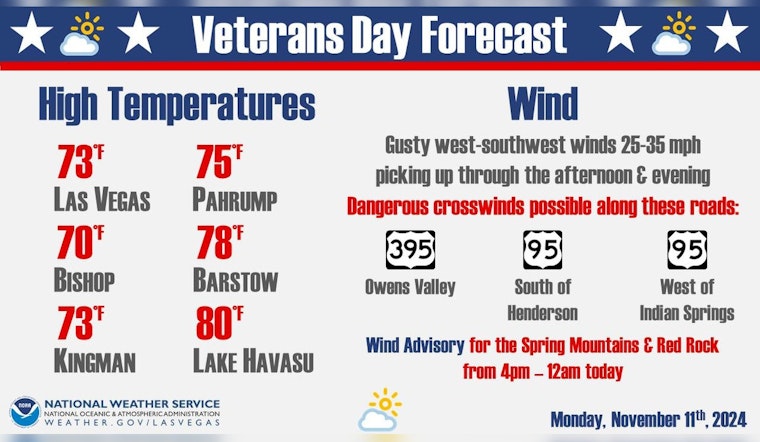
Residents in Las Vegas and surrounding areas should brace themselves for a windy start to the week, according to the latest forecast from the National Weather Service. The NWS Las Vegas office reports that an open wave trough is expected to pass through the Desert Southwest today, bringing gusty west-southwest winds this afternoon and evening, with a shift to gusty northwest winds late tonight and into tomorrow. The Owens Valley is particularly at risk, with potential crosswinds along Highway 395 that could create hazardous driving conditions, especially for high-profile vehicles.
In the Spring Mountains, including popular areas like Lee and Kyle Canyons, there's a substantial chance of winds exceeding 58 mph. Though no Wind Advisory has been issued for Owens Valley and certain parts of San Bernardino County, a Wind Advisory remains in effect for the Spring Mountain zone, where crosswinds could severely impact Highway 95 west of Indian Springs. Higher elevations of the southern Great Basin and the eastern Sierra are also expected to see a light dusting of snow as temperatures dip following the trough's passage.
The weather's silver lining comes in the form of a ridge that will raise temperatures back to near-average through the week. However, the NWS advises that a stronger system lurking will likely introduce more turbulent weather over the Desert Southwest this coming weekend. While precipitation chances remain uncertain, the higher elevations of the northern zones currently have the best chance for showers.
Travelers and aviation interests should remain vigilant. Light southwest winds will continue through the morning before turning to the east by mid-day, as stated by the NWS. The expected increase in wind activity poses a concern for rotor development along the eastern Sierra and could lead to occasional gusts to 40 knots. Pilots can expect VFR conditions to continue despite scattered high clouds, but they should be aware of the prevailing winds, especially those operating in the western Mojave Desert and near the Spring Mountains overnight. Spotter participation may prove critical, as citizen reports can greatly aid in the real-time assessment of wind-related impacts on communities.





