

























































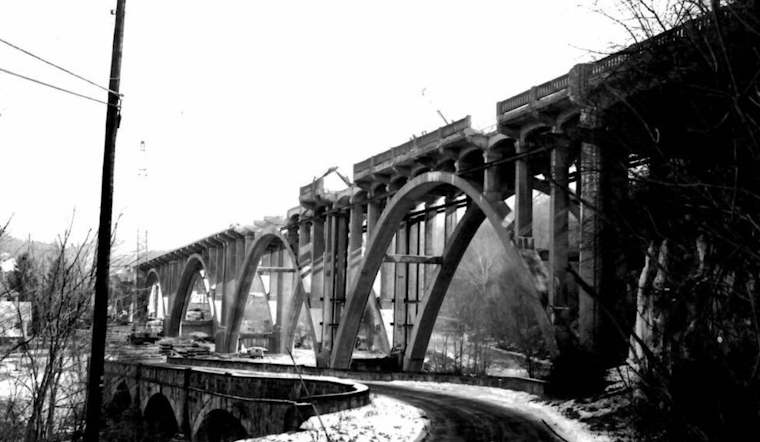
The Ohio Department of Transportation (ODOT) has announced plans to rehabilitate the historic U.S. Route 40 bridge in Belmont County, Ohio. The Blaine Hill Arches of Memory Rehabilitation Project will reinforce the bridge's aging structure while preserving its storied past. The undertaking includes replacing the superstructure to ensure safety and maintain the aesthetic rooted in tradition.
Funding for the pivotal project is already in place. Still, ODOT is seeking additional financial support through the Bridge Investment Program, a grant within the United States Department of Transportation's Bipartisan Infrastructure Law. As the Ohio Department of Transportation (ODOT) stated in a recent release, Deputy Director Tom Corey commented, "ODOT prioritizes safety above all else. We recognize that the closure is inconvenient for those living and working in the area and are making every effort to expedite the project. We want to ensure this work keeps this vital bridge in service to our community for decades to come."
ODOT plans to start construction by 2027, hoping to start earlier. Michael Baker International is currently laying out the design. The bridge's notable history dates back to 1932, boasting four iconic arch spans. Concerns necessitating the rehabilitation came after significant deterioration—like leaking and cracking on the deck, plus damage to the columns and concrete structure—led to its closure in 2024.
The Blaine Hill Viaduct connects local communities, including Blaine, Boydsville, Lansing, and Brookside. Its rebuilding is meant to restore local traffic and support the region's freight movement. According to the ODOT, the upgrade will keep the bridge's current configuration, with minor changes to pedestrian facilities. Ensuring the modernization of this lifeline is balanced with its historic relevance is a priority.
Rehabilitation measures align with the need for long-lasting infrastructure and due respect for the bridge's architectural significance. The project incorporates modern materials, such as advanced concrete sealants, and design methods to extend the bridge's life and preserve its historic character, supporting broader efforts for infrastructure maintenance with a nod to heritage preservation.




