

























































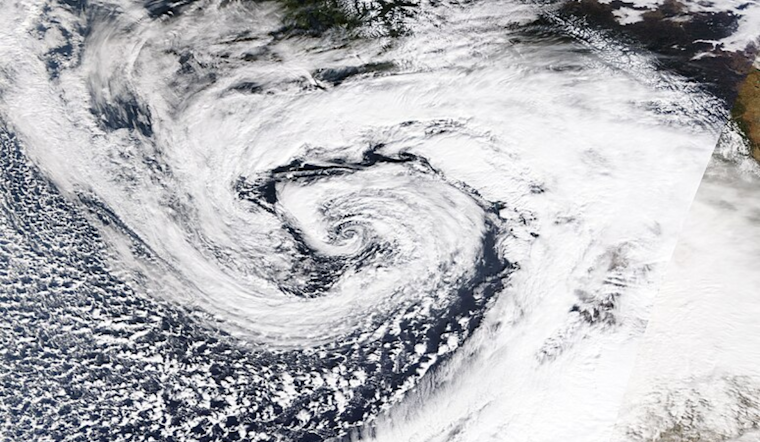
The West Coast has been experiencing a meteorological phenomenon known as a "bomb cyclone," which has caused significant weather disruptions, leading to two fatalities and power outages affecting hundreds of thousands of people. A bomb cyclone, which strengthens rapidly over a short period, has created severe conditions in Northern California but is anticipated to lose strength as it moves southward, bringing less severe implications to Southern California.
According to NBC 7 meteorologist Greg Bledsoe in a report obtained by NBC San Diego, "We shouldn't expect much rain down here." Rain chances are forecast to commence Saturday night into Sunday morning but are expected to be light. The reports have mentioned that San Diego County might experience less than a tenth of an inch of rain along the coast and valleys and slightly more in the mountainous regions. The desert areas are foreseen to see no rainfall from the system.
The term "bomb cyclone" stems from the process known as bombogenesis, which denotes a cyclone that intensifies explosively. According to CBS 8, an atmospheric river often accompanies such cyclones, carrying massive amounts of moisture in a narrow band across the sky. This can lead to significant precipitation, contributing to rain and snowfall that can be beneficial but also potentially catastrophic in terms of flooding.
The impact of this bomb cyclone on San Diego is predicted to diminish in intensity. Periods of light to moderate rain are expected between Saturday and Monday, with the heaviest accumulations expected on Sunday. However, the local weather team anticipates cooler temperatures and more cloud cover due to the storm. Thanksgiving is forecasted to remain dry, as any lingering storm systems are expected to stall north of San Diego County, leaving the holiday weather unaffected.



