

























































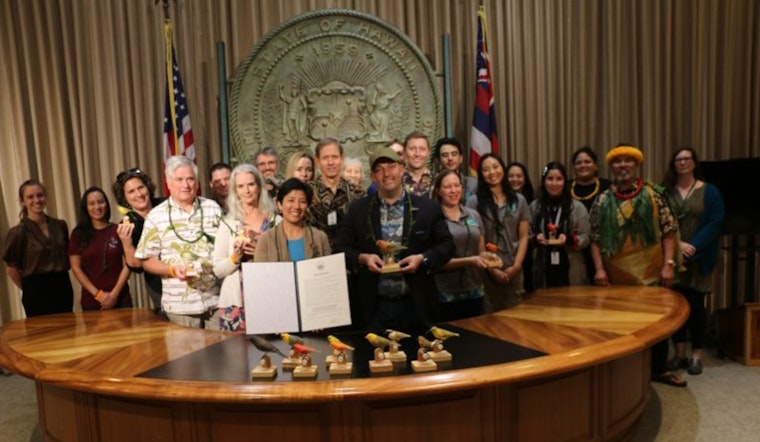
Hawaii's feathered friends have had a rollercoaster of a year, according to an article by the Department of Land and Natural Resources. Despite the challenges, 2024 stood out as the "Year of the Forest Birds," an effort marked by extensive community engagement and resolute conservation measures. Governor Josh Green, M.D. set the tone in January with an official proclamation aimed at increasing attention on Hawaiian forest birds and their marginalized status.
Yet, the stark reality for the most critically endangered species has been one of consistent decline. Reports show that the ʻakikiki is teetering on the brink of what experts term 'functional extinction', with a paltry five or fewer birds free-flying in their native Kauaʻi habitat. Similar fates loom for the island's ʻanianiau and ʻakekeʻe, as well as Maui's kiwikiu. With numbers dwindling, conservationists are racing against time, collecting these birds for captive breeding programs aimed at stymieing potential extinctions. Meanwhile, the endangered palila faces dire straits on Hawaiʻi Island, with invasive species like cats, rats, and mongooses decimating their numbers to a mere 500 individuals.
But it's not all doom and gloom for these avian residents. In recent weeks, a glimmer of hope came with the release of five ʻalalā (Hawaiian crow) into Maui forests. This pivotal moment marked their much-awaited return to the wild after a prolonged captivity-only existence. There's also an update on the romantic front from Kauaʻi, where Pakele, one of the last wild ʻakikiki, was spotted with a hopeful mate, Liko. Over on Maui, the kiwikiu named MAPA1 continues to beat the odds, making unexpected appearances in the wild years after being presumed lost to disease.
In the face of these challenges, new conservation strategies have emerged. On Maui, the Maui Forest Bird Recovery Project put into action the Incompatible Insect Technique (IIT), geared at slashing mosquito numbers to fight the spread of avian malaria. This initiative has manifested as a beacon of hope and is set to extend its reach to Kauaʻi in 2025, with potential life-saving implications for the likes of Pakele and Liko. In a move to amplify awareness, the Birds, Not Mosquitoes partnership unleashed a poignant documentary, "Vanishing Voices," that sheds light on the avian malaria crisis and the promise of IIT. The documentary can be watched online, an effort to spread the word and galvanize support, as reported by DLNR.
Public awareness is on the rise, too, with surveys indicating a drop in the number of Hawaiʻi residents unable to name a local forest bird, from 59% in 2017 down to a mere 24% in 2024. As the Year of the Forest Bird winds down, students from across Hawaiʻi are pitching in, contributing heartfelt video messages that will be circulated on Instagram via accounts from DOFAW and allied campaigners. These messages express their new knowledge of forest birds and their importance to the island's ecosystem.




