

























































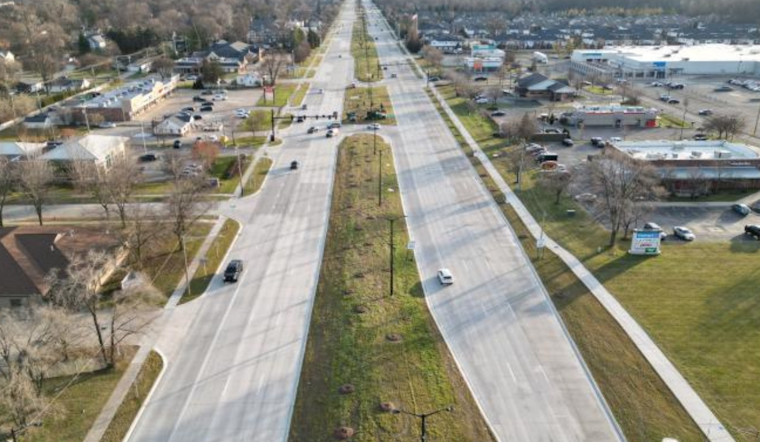
Macomb County's roadwork vision, dubbed Innovate Mound, has earned a spot as the fifth-best road project in North America according to Roads & Bridges magazine. The innovative approach taken by the Macomb County Department of Roads (MCDR) has been lauded for its exceptional construction, unique funding strategies, and forward-looking technology. In the vast expanse of the United States' transformative infrastructural ventures, the distinction marks Macomb County as both a leader and pioneer in the field.
With the project's total cost hitting $217 million, the work began in August 2021 and spanned a grueling four construction seasons, triumphantly concluding both on time and budget. The initiative overhauled a critical stretch—around nine miles—of Mound Road, from I-696 to M-59, promising enhanced mobility for Michigan's populous manufacturing sectors. Although the project faced immense expectations and ever-looming deadlines, the collective action of MCDR, Sterling Heights, Warren, SEMCOG, MDOT, and FHWA has birthed a corridor designed to endure and adapt for many years, said Macomb County Executive Mark A. Hackel, as per Macomb County.
Initiatives such as these are not born out of a vacuum but are conceived through the concerted effort of myriad stakeholders. In 2016, more than a hundred business and community leaders gathered to ideate a lasting solution for Mound Road. This collective vision materialized into a successful federal grant application in 2017, orchestrated by a coalition of state and local leadership, which eventually garnered a $98 million Infrastructure for Rebuilding America (INFRA) grant courtesy of the U.S. DOT and an additional $32 million from Michigan's coffers in 2022.
The "Innovate Mound includes the latest traffic and safety technology and high-performance pavement. We've built a high-quality, long-lasting roadway that will support a modern, efficient and reliable corridor," MCDR Director Bryan Santo declared, as per Macomb County. Santo's statement reflects the ambition to establish a test bed for emerging mobility services, acknowledging the dynamic evolution of transportation needs. The litany of advancements—signal modernization, connected vehicle technology, and traffic congestion detection, among others—are pieces of a larger, more intricate puzzle. They represent efforts not just to pave a road, but to pave the way towards a future that accommodates tomorrow's innovative strides in mobility and connectivity, Santo conveyed in an interview.




