

























































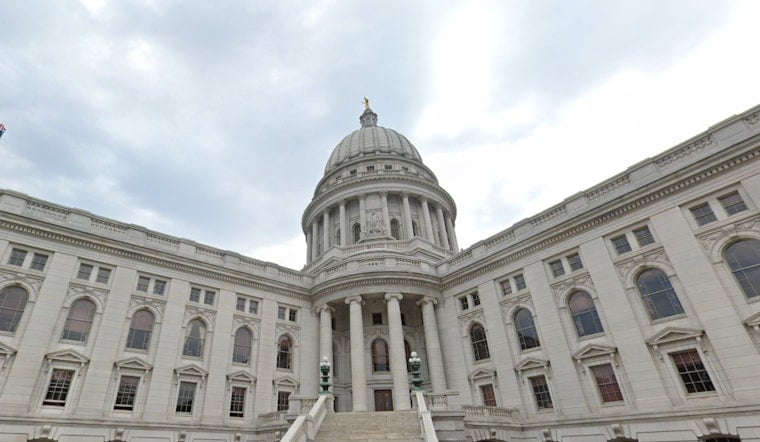
The upcoming Wisconsin Supreme Court race is shaping up to be more than just an election; it's become a battleground for union rights in the state. A recent ruling by a Wisconsin judge has shifted the focus onto collective bargaining rights for public workers, further elevating the importance of the April 1 election. As reported by Spectrum News 1, the court is currently liberal-controlled and has been active in cases significant to Democrats, including striking down Republican-drawn legislative maps.
The latest twist in the drama comes from Dane County Circuit Judge Jacob Frost's decision to quickly restore collective bargaining rights to around 200,000 public employees—a move that the Republican-controlled Legislature has already appealed. As noted by KTVZ, this action intensifies what was already set to be a pivotal election, potentially igniting another seismic shift for Democrats, as well as public teachers and government workers in the state.
The stakes of the outcome reach far, threatening to either solidify liberal control or swing the balance back to conservatives. The race pits former Republican Attorney General Judge Brad Schimel against liberal Judge Susan Crawford. Schimel touts endorsements from prominent Republicans and law enforcement officials. In contrast, Crawford, endorsed by teachers' unions and the Wisconsin Democratic Party, represented teachers in an attempt to overturn the anti-collective bargaining law known as Act 10—legislation that the state Supreme Court, then controlled by conservatives, upheld in 2014, as FOX 6 Now reported.
Questions regarding impartiality have arisen due to Crawford's past efforts against Act 10. However, Christina Brey, a spokesperson for the Wisconsin Education Association Council, maintained that Crawford earned the union's endorsement because "we believe she is going to be the most dedicated and most impartial, constitution-believing judge to put on the Supreme Court," according to a Spectrum News 1 statement. Meanwhile, Schimel's campaign accused Crawford of being a "radical" and a Democratic "pawn."
With the future of Act 10 potentially in the balance, Judge Frost's ruling has only added fuel to an already incendiary race. The statewide implications of this contest are not to be underestimated, as Rick Esenberg, of the Wisconsin Institute for Law and Liberty, pointed out—"You can make the argument that this race is more important than the race for the Legislature or the governor," he told Spectrum News 1.




