

























































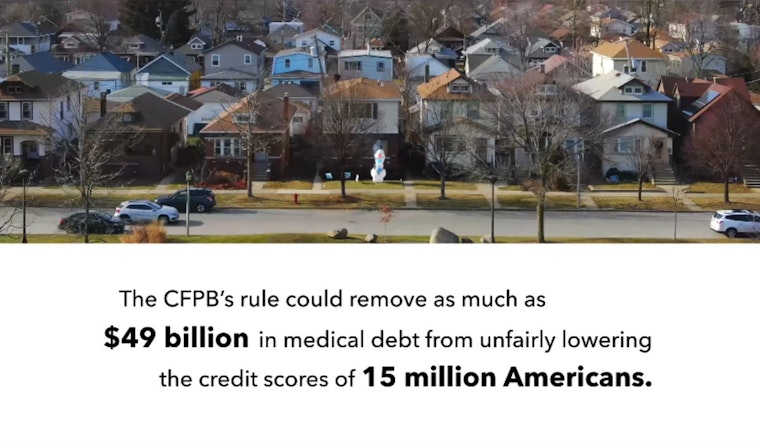
In a significant move that promises relief for millions, the Consumer Financial Protection Bureau (CFPB) has officially finalized a rule set to helpfully eradicate $49 billion in medical debt from roughly 15 million Americans' credit reports. As per the details shared on the agency’s website, medical bills will no longer haunt the credit reports used by lenders, nor will such information play a role in lending decisions. The CFPB’s findings indicate that these debts are not predictive of a consumer's financial reliability and often result from billing inaccuracies or insurance coverage gaps. "People who get sick shouldn’t have their financial future upended," CFPB Director Rohit Chopra stated.
The trickle-down effect of this change is expected to be substantial, as the CFPB research suggests that credit scores could see an average rise by 20 points for those with medical debt entries. This could potentially translate into 22,000 extra mortgage approvals each year. The effort to disentangle medical debt from credit reporting began earlier as the big three credit bureaus—Equifax, Experian, and TransUnion—agreed to remove certain types of medical debt from reports. Meanwhile, FICO and VantageScore revised their scoring models to lessen the impact medical debt has on a consumer’s credit score.
The rule amending Regulation V, which enforces the Fair Credit Reporting Act (FCRA), shuts down an exception that had allowed medical debts to be used in consumer credit evaluations. This modification aims to erect stronger privacy barriers and slams the door on the use of credit reports by debt collectors to aggressively push for payments, irrespective of the charge’s legitimacy. Moreover, the rule bars lenders and credit reporting agencies from including details about medical debt on reports sent to lenders, stripping this data of its influence over lending verdicts.
Not only does today’s rule enforce newly drawn lines in the legislative sand, preempting predatory practices, but it also synchronizes with past congressional efforts intended to protect consumer privacy. It comes on the heels of October guidance by the CFPB, which clarified that the act of collecting on inaccurate or legally dubious medical debts constitutes a violation of federal law. The CFPB has been vigilant in this arena, consistently highlighting the weighty, often crippling, burden of medical debt on consumers and delineating their legal rights via the No Surprises Act.
The operational switch is scheduled for 60 days after its Federal Register publication, setting a new course for American consumers struggling under the unfair leverage of medical debt. Consumers seeking to lodge complaints or to better understand the credit reporting requirements can do so by reaching out to the CFPB via their website or by calling (855) 411-CFPB (2372).



