

























































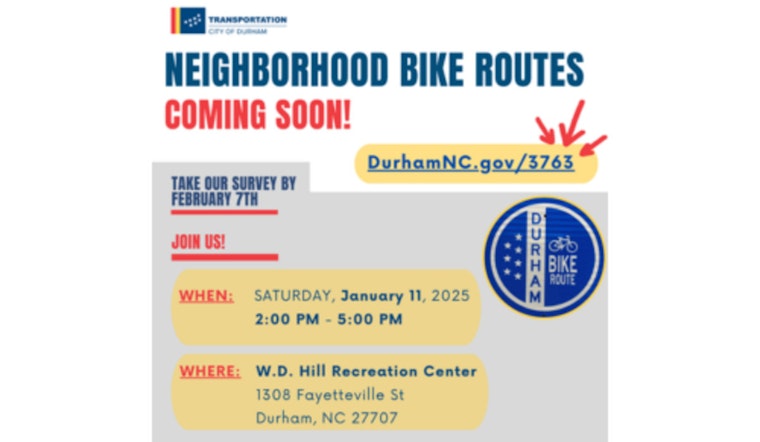
Durham residents, it's your chance to help shape the direction of local biking infrastructure as the City of Durham invites public input on Phase II of the Neighborhood Bike Routes Project, connecting neighborhoods, educational institutions, and trails. Starting today, an online survey is available for residents to provide their feedback on the proposed bike routes which aim to improve roadway safety and accessibility to key destinations.
The survey, due by February 7, asks for community perspectives on adding approximately 11 miles of bike routes across 24 streets, including connections to North Carolina Central University and the dynamic American Tobacco Trail. Residents can view a detailed map of the proposed routes, and share their insights by 11:59 p.m. on the aforementioned due date, all on the project's webpage on the City of Durham website. To ensure roadway safety, the city plans to incorporate traffic calming measures such as traffic circles, and curb extensions in the design of these bike boulevards.
In a bid to reach out and engage directly with the community, city Transportation staff will be present to answer questions on January 11, at the Dr. Martin Luther King Jr. event at the W.D. Hill Recreation Center. The event, running from 2 to 5 p.m., provides an opportunity for residents to discuss potential bike route locations and design concepts with the people responsible for bringing these plans to fruition.
Since the commencement of the project in 2019, the Transportation staff have successfully managed the development of seven miles of neighborhood bike routes across the city, covering areas such as Watts Street, and Glendale Avenue. The forthcoming Phase II additions to the city’s biking network is backed by the City’s Capital Improvement Plan, paving the way for construction to potentially begin by fall 2025. Accessibility and regional connectivity remain at the forefront of this transportation initiative.





