

























































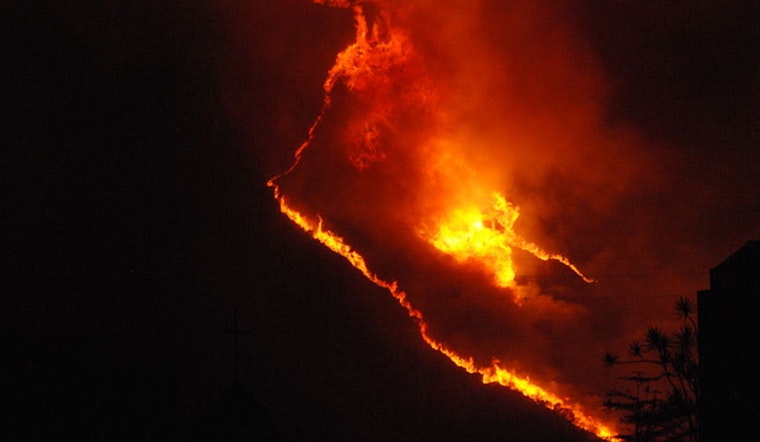
The Sunset Fire, a swiftly expanding wildfire in the Hollywood Hills, has scorched 60 acres and prompted mandatory evacuation orders and warnings as it burned perilously close to homes and iconic landmarks such as the Hollywood Bowl, per a report from Patch. The fire initially emerged around 5:30 p.m. near Solar and Astral drives and has led to the establishment of an evacuation center at the Pan Pacific Recreation Center, said officials; meanwhile residents are battling gridlock as they heed the warnings and orders to flee their homes for safety, the situation is made worse because flames are spreading so rapidly many have little time to escape, leading to chaos in some areas.
The Los Angeles Fire Department (LAFD) confirmed that the evacuation order has been mostly lifted, except for the area between Camino Palmero St and N Sierra Bonita Ave which will remain closed until further notice due to ongoing operations to prevent potential flare-ups, according to the latest statement from the LAFD's official news release. This targeted approach by the LAFD reflects the agency's commitment to ensuring the safety of residents, even as the fire's footprint remains significant and potential risks persist.
As firefighting crews continue to confront the conflagration, the communities around the blazes suffer from wide-scale power outages – with more than 456,000 Southern Californians in the dark, as noted by AP News. The disruption extends beyond residential areas as public entities and businesses reel from the impact. Schools have been damaged or destroyed and landmarks reduced to rubble, altering the landscape of quotidian life and livelihoods for many individuals in affected neighborhoods.
Climate experts correlate the aggravated wildfire season in California with climate change, an ordeal translating to earlier and more protracted periods of wildfires due to increased temperatures and reduced rainfall, "California's wildfire season is beginning earlier and ending later due to rising temperatures and decreased rainfall tied to climate change," AP News reported. These dire circumstances underscore the urgent need for comprehensive strategies that address the causes and the effects of such environmental phenomena, as society grapples with the forces of nature that seem increasingly relentless and unforgiving in their wake.






.jpg)