

























































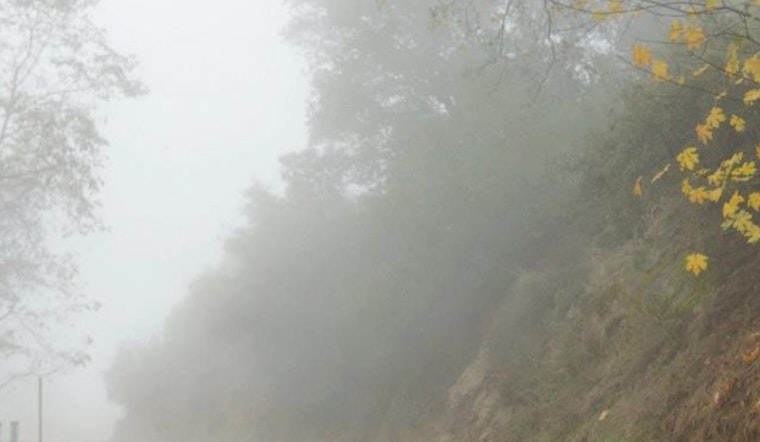
Los Angeles drivers faced reduced visibility conditions today as the National Weather Service issued a Dense Fog Advisory in effect until 10 AM PST. The fog, which engulfs parts of Southern California, including Downtown Los Angeles, Santa Barbara County Southeastern Coast, Ventura County Beaches, and Ventura County Inland Coast, creates hazardous driving situations with "Visibility one quarter mile or less in dense fog," as per the National Weather Service advisory.
Furthermore, Los Angeles residents are urged to comply with the South Coast AQMD's mandatory wood-burning ban extended through Friday evening, the ban aims to mitigate air pollution amidst an air quality alert, affecting the South Coast Air Basin, which includes Orange County and non-desert portions of Los Angeles, Riverside, and San Bernardino counties, but "No-Burn Day alerts do not apply to areas above 3,000 feet in elevation, the Coachella Valley, or the High Desert," as stated by the NWS Air Quality Alert. Exemptions apply for homes reliant on wood as the sole source of heat, for low-income households, and for those without natural gas service.
Driving precautions during the Dense Fog Advisory include slowing down, using headlights, and maintaining ample distance ahead, as the National Weather Service underscores the low visibility could make driving conditions hazardous, drivers and residents overall are heavily encouraged to heed these safety measures to avoid perilous situations while navigating the roads. Coincidentally, the Los Angeles area is set to experience fairly mild temperatures in the coming days, with a forecasted high of 67 degrees today, partly sunny, followed by a cooler night around 46 degrees, according to the National Weather Service.
As the city grapples with these environmental advisories, residents are reminded to stay informed through the South Coast AQMD's channels, including their website and mobile app, which offer real-time updates on air quality and the status of No-Burn Days, "Particles in smoke can get deep into the lungs and cause health problems (including asthma attacks), increases in emergency room visits, and hospitalizations," as detailed by the NWS Air Quality Alert. Individuals must manage exposure to outdoor air when air quality is poor, staying indoors whenever possible, as running air conditioners or air purifiers can aid in reducing the inhalation of pollutants, these efforts are not only a matter of individual wellness but a matter of communal health and safety.





