

























































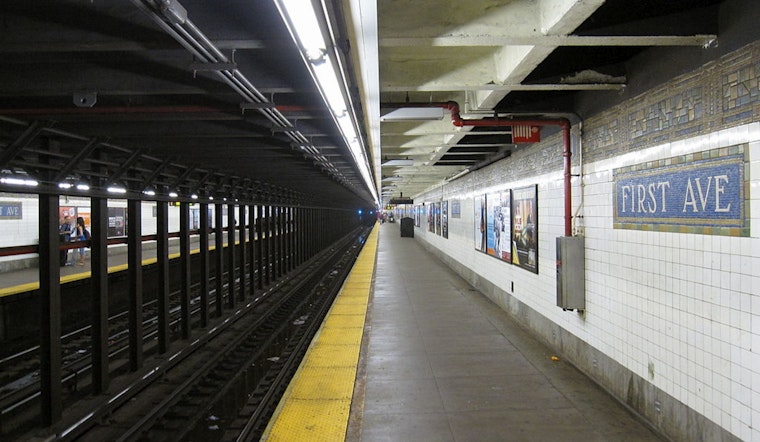
The MTA has been implementing a series of metal barriers across Brooklyn and Manhattan subway platforms in response to increasing concerns over passenger safety. As per Crain's New York, these installations come in the wake of a reported rise in the number of people struck by trains due to being pushed or falling onto the tracks. The waist-high barriers, now in place at 10 stations, serve as a deterrent to potential accidents or intentional pushes.
Following the unsettling incident where Kamel Hawkins pushed a man onto the tracks, the addition of barriers is one angle officials hope will make riders feel more secured. According to Gothamist, these metal guards are 4 feet tall, divvied up in sections which do not align with areas where subway car doors open. While the barriers can offer security to an extent, concerns have been voiced where the MTA cautions that potential injuries could stem from passengers being caught by the barriers during chaotic rush hours.
Despite fears of underwhelming infrastructure changes, commuters have been showcasing mixed reactions. "It’s better than nothing, but I’d rather they spend the money on giving us full protection," Shelia Brown reported to Crain's New York, waiting for a train at the Grand Central-42nd Street station. On the other hand, Ben Goldberg expressed a slightly more optimistic view, saying, "It's a little simplistic, but it would make me feel a bit safer knowing I can hug a barrier when a train’s coming," he told Crain's New York.
Sam Schwartz, a former New York City traffic commissioner and transportation engineer, championed the MTA's approach as being the most cost-effective. Amidst the praise, a study commissioned by the MTA in 2022 pointed out that a widespread installation of platform doors would run a tab of approximately $7 billion, limiting the possibility to only a fraction of the city's subway stations as the barriers' weight and the narrow platform space pose significant issues. Schwartz advocated for the improvised solution, as stated in Gothamist, acknowledging that sometimes "low-tech, low-cost measures are best, especially now that congestion pricing is on hold."
It's clear the MTA is pressing forward with its strategy to escalate security measures at a steady pace – aiming to install the barriers at one to two stations each month throughout the year, contingent on the timing of material delivery, MTA spokesperson Kayla Shults reported in an email to Gothamist. This tactical deployment of barriers, while not a complete fix, represents a tangible step towards improving the immediate safety of New York's subway system in response to the troubling spate of recent incidents.





