

























































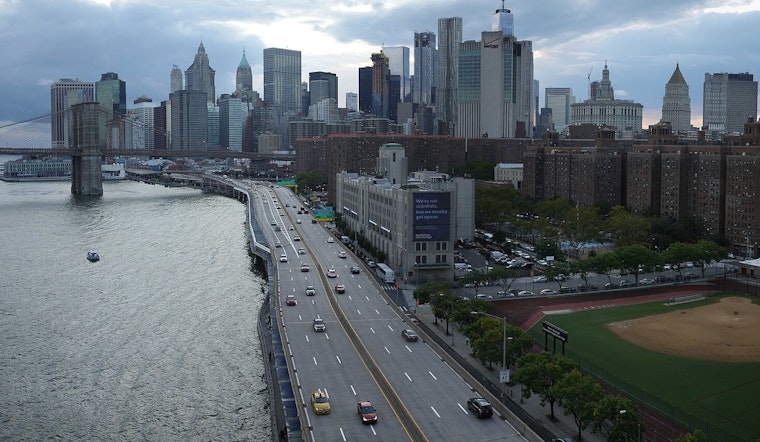
New York City's attempt to alleviate the perennial snarl of traffic with congestion pricing is currently producing a patchwork of results. The new tolling system, aimed at reducing overcrowding and improving commute times in Manhattan's busiest arteries while funding transit system improvements, has witnessed a three-week phase-in. Within this nascent period, the Metropolitan Transportation Authority (MTA) has initiated a "sting operation" to tackle drivers with obscured plates trying to artificially circumvent the system. According to Eyewitness News, the crackdown on the Brooklyn side of the Battery Tunnel has already resulted in arrests and is part of a collaborative effort involving different enforcement agencies operating sting operations twice a week.
Drivers have employed ingenious methods to skip the tolls, notably a nanofilm which renders license plates invisible to camera detection—a technology to which NYPD Transportation Deputy Chief Thomas Alps referred as a "threat" since it allows plates to "look normal but when the camera sees it, it’s blank." Despite the 92% compliance rate with the tolls as revealed by MTA officials, the effort to identify and apprehend the outliers is ongoing and has already aided in recouping a significant portion of the estimated $240 million lost annually due to various forms of toll evasion.
Meanwhile, the broader impact of congestion pricing on city traffic continues to stir both relief and frustration among commuters. According to an analysis by The New York Times, while some thoroughfares have seen improved travel times since the toll's implementation, overall rush hour speeds have dropped by 3 percent in the morning and 4 percent in the evening compared to a previous year. Data from INRIX, a transportation analytics firm, has further complicated this picture by noting slower commute times in outer boroughs and parts of New Jersey, suggesting a redistributive rather than uniformly alleviative effect of the new tolling policy.
Despite the mix of experiences, personal accounts suggest that the tolls might to be beginning to show the promise of a more fluid commute. Lesly Silva, a hospital technician from New Jersey, mentioned in The New York Times interview, "I take my time getting to work," after noticing a considerable reduction in her commute time. Boxcar, a private bus service, reported drops of five to ten minutes for morning and 15 to 20 minutes for evening commutes. According to the company's founder and chief executive, Joe Colangelo, the buses are simply "flying."
Overall, the congestion pricing scheme remains contentious among New Yorkers, with a December Siena College survey indicating over half of the state's voters are opposed to the plan. The question of its survival amidst legal challenges and political opposition, including critical views expressed by President Trump and Gov. Philip D. Murphy of New Jersey, leaves the future of this traffic experiment hanging in the balance. Nonetheless, a more articulate understanding of the program's efficacy will likely require more data and time, as transportation experts, agency officials, and everyday commuters continue to adjust to New York's changing traffic landscape.




