

























































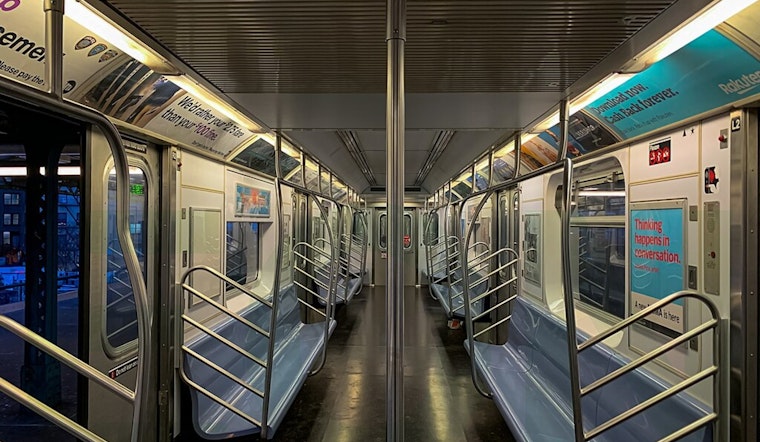
As New York grapples with the twin issues of crime and homelessness in its storied subway system, Governor Kathy Hochul's new safety plan is rolling into action. Yesterday evening, additional uniformed NYPD officers have begun to take their post aboard the overnight trains, a sight meant to reassure the public and deter would-be perpetrators. According to ABC7NY, this is just the initial phase of a strategy that will see a bolstering of police presence, with 300 officers slated to ride in pairs on 150 trains running during the wee hours from 9 p.m. to 5 a.m.
Alongside these measures, Governor Hochul's $77 million initiative includes a significant investment in mental health outreach as well as innovations designed to clamp down on fare evasion, such as new cameras and more illuminating LED lights. This operation, which Hochul has indicated she wants to extend through at least the end of 2025, plays into a broader narrative of seeking a sense of renewed safety across the city's vast transit network. "Now, people want to see police officers in the stations and on the trains," the governor expressed in a statement obtained by ABC7NY, underscoring a communal desire for a fortified sense of protection.
The Metropolitan Transportation Authority (MTA), and by extension, the commuting public, have welcomed these security upgrades. "Having a cop on every train is really going to alter the safety equation," MTA CEO and chairman Janno Lieber commented, according to a PIX11 report. Such sentiments are echoed by everyday riders like Tara Robinson who recognized the dual purpose of the policy, saying, "It will be a good idea, you know, just to make sure that everyone is safe including those people who are mentally ill or who need the additional help."
With approximately 750 additional officers expected to reinforce patrols in the coming weeks, officials anticipate increased security across transit lines. In addition to enhanced enforcement, Governor Hochul announced plans to expand homeless services near end-of-line stations, aiming to connect vulnerable populations with shelter and support. The safety plan addresses urban transit security amid ongoing social and economic challenges.





