

























































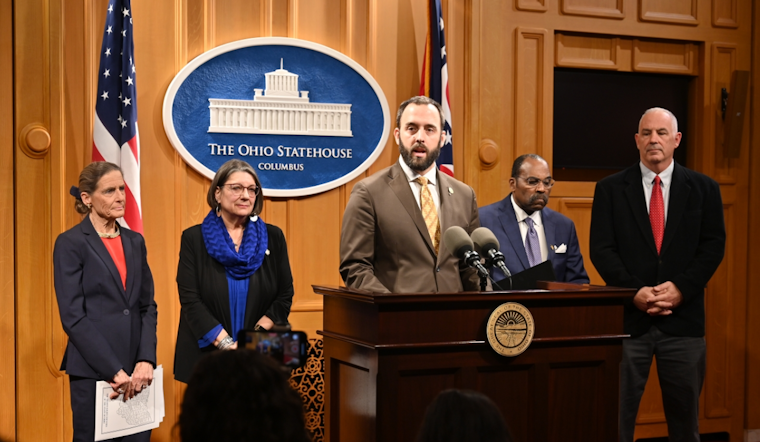
Ohio's political landscape is gearing up for what looks to be a resolute shift concerning state-funded life terminations. Representatives Adam Mathews (R-Lebanon) and Jean Schmidt (R-Loveland) unveiled a bipartisan bill set to ban state spending on practices that end human lives—namely the death penalty, assisted suicide, and abortion. In a recent press conference, these lawmakers argued for the need to draw a firm fiscal and ethical line.
The forthcoming legislation ties the issues of capital punishment, assisted suicide, and abortion funding together with a non-severability clause, highlighting the representatives' commitment to a value-driven approach. Schmidt, who has long been vocal about her pro-life stance, stated, "This ‘first of its kind’ legislation will protect state dollars, and more importantly, human life," according to a statement obtained by the Ohio House of Representatives. She emphasized a comprehensive affirmation of life that "must extend to every circumstance and stage of development."
Representative Mathews echoed Schmidt's sentiments, framing the bill as more than mere policy. "This is transformative legislation that represents a new era of fiscal and moral conservatism and responsibility," Mathews conveyed, according to the Ohio House of Representatives. The bill underlines an intention to send a clear signal that Ohio will not fund death. Further, Mathews and Schmidt were backed by notable figures across party lines, including State Senator Steve Huffman (R-Tipp City), Senate Minority Leader Nickie Antonio (D-Lakewood), and Senate Assistant Minority Leader Hearcel Craig (D-Columbus). Brian Hickey of the Catholic Conference of Ohio and Rachel Muha of the Run the Race Club were also in attendance, offering their support.
The ambitious alignment of fiscal conservatism with the resolve to affirm life reflects an uncommon melding of cost-conscious governance and moral imperatives. While the bill's opponents have yet to vocalize their positions formally, the legislation's supporters hope it will stand as a benchmark for how other states might approach contentious life-and-death matters. As this legislation progresses through the legislative process, Ohio stands at a potential turning point, poised to enact a policy that could resonate far beyond the Buckeye State's borders.



