

























































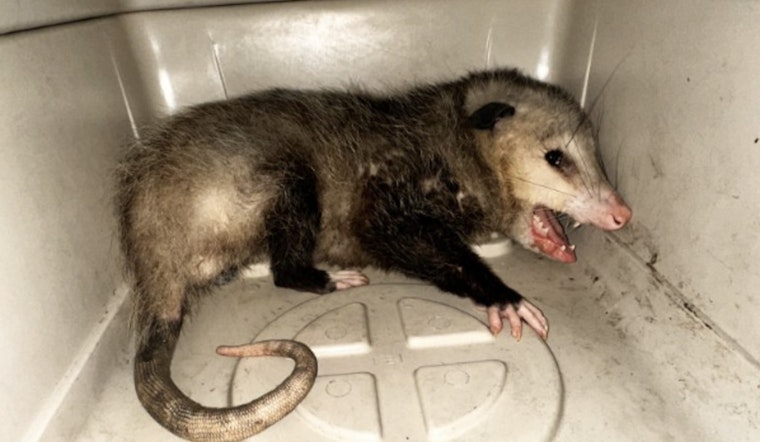
An opossum found in a Kona big-box store had its time there cut short over the weekend. The Hawai‘i Department of Agriculture (HDOA) received a call from the store around 11:00 p.m. on Saturday, Jan. 4, after the animal was caught in a trap set by staff, according to an HDOA report. The next morning, an inspector from HDOA’s Plant Quarantine Branch secured the approximately six-pound male opossum and arranged for its transport to Honolulu for further examination. Due to concerns about its origin, the animal was humanely euthanized to facilitate rabies testing.
Opossum sightings have been reported more frequently in Hawaii, despite the species' North American origins. In addition to the recent December incident, when an opossum was found in a big-box store in Iwilei on O'ahu, there were previous encounters, including one in August at a Kalihi freight company where an opossum had entered a shipping container, and another in July when one was spotted on a Downtown Honolulu office building's window ledge. While opossums are not typically associated with rabies, they can carry parasites and other health concerns. The Hawai‘i Department of Agriculture has noted that these animals are omnivores with a wide-ranging diet, which may contribute to their adaptability in urban environments.
Opossum sightings in Hawaii have occurred over several years, with one of the earliest incidents taking place in 2016 when a worker at Honolulu Harbor captured an opossum that had disembarked from a cargo ship. Another sighting occurred in July 2015 near the U.S. Immigration and Naturalization Office in Kaka‘ako. Additional reports include captures at a Sand Island warehouse in 2012 and inside a shipping container at Ward Center in August 2011. Going back further, opossums were reported at Hickam Air Force Base and a postal facility at Honolulu International Airport in 2005. These recurring sightings point to a pattern of opossums arriving via cargo shipments.
As Hawaii addresses the rise in opossum sightings, residents are encouraged to report any unusual animal activity. The state has established a PEST HOTLINE, advising anyone who spots an invasive species to call 808-643-PEST (7378). These reports are part of ongoing efforts to address biosecurity concerns and protect the island's ecosystem.





