

























































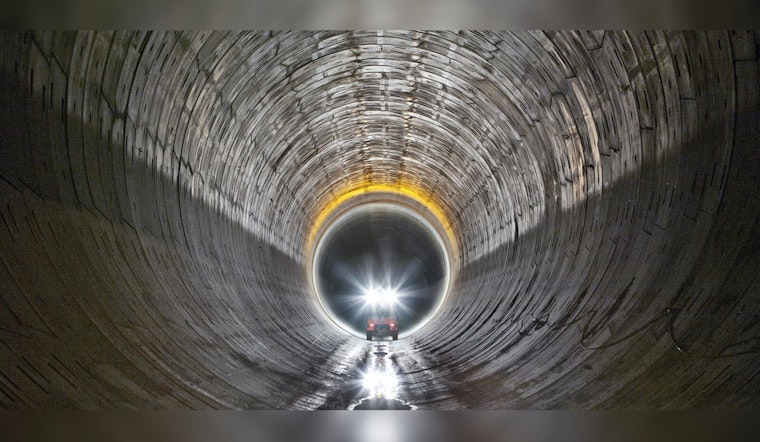
Portland's ambitious infrastructure initiative, the Big Pipe Project, just notched another win, marking an entire year without a combined sewer overflow (CSO), a substantial stride toward ensuring the purity of the Willamette River. As detailed in a City of Portland press release, since its completion in 2011, the $1.4 billion endeavor has significantly lessened overflows, curtailing them by up to 94% in the Willamette and 99% in the Columbia Slough.
Weathering rains that once wrought sewage spillovers, Portland residents now observe a river transformed, where water sports are not just fantasies but fixtures of a new reality. "Going a year without a combined sewer overflow would not be possible without the Big Pipe Project," Environmental Services Director Dawn Uchiyama stated in the report. According to the City of Portland press release, Priya Dhanapal, Deputy City Administrator for Public Works, took a moment to underscore the depth of ingenuity and dedication behind the system, "While the Big Pipe System is impressive in scale, the work that went into designing, constructing, and now operating and maintaining the Big Pipes is equally impressive."
These developments hark back to an era fraught with pollution, where 50 annual CSOs were the norm, both endangering public health and impeding recreational use of the river. Today, the Big Pipe Project's efficacy can be monitored in real-time through the Big Pipe Tracker, a digital tool that keeps citizens informed about infrastructural performance during heavy rainfall periods.
Environmental Services hasn't rested on its laurels, as Portland's water and sewer infrastructure is a sprawling network, comprising over 2,000 miles of pipes, numerous green street planters, pump stations, and wastewater treatment plants. The article from the City of Portland states the STEP at the Columbia Boulevard Wastewater Treatment Plant is their latest large-scale endeavor. With a staggering $515 million budget, this project, the most substantial since the 1970s, is designed to boost capacity and efficiency while preparing the city's facilities to better withstand future challenges, as per the City of Portland.





