

























































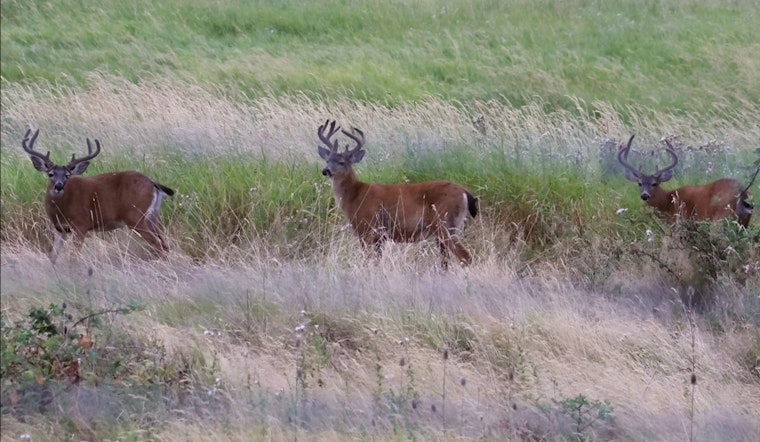
Biologists at the Washington Department of Fish and Wildlife are launching a study on black-tailed deer populations in southwest Washington, aimed at refining monitoring methods for these elusive creatures. As per a recent release on the Washington Department of Fish and Wildlife website, researchers are up against a tough challenge since the dense vegetation of these deer's habitat makes traditional surveying nearly impossible. "Black-tailed deer are hard to survey because of the densely vegetated habitat they live in," said Kyle Garrison, WDFW ungulate section manager, detailing the difficulties faced during population counts.
The study, starting this month, will employ a range of cutting-edge technologies. GPS collars will be used on the deer to provide real-time data about their whereabouts. Trail cameras are also being set up, capturing photos and videos of the deer that pass by. Moreover, proximity sensors will signal the presence of a collared deer near a camera, circumventing the issue of the camera not visually capturing the deer. Pooling together this cornucopia of data could significantly sharpen the department's ability to estimate the number of black-tailed deer roaming Washington's woods.
"Improving our understanding of these populations and their characteristics will help us better manage this species into the future, including during hunting season setting," Brendan Oates, another WDFW ungulate specialist stated. The state and private industrial forestlands east of Longview, within the confines of Game Management Units 520, 550, and 556, will become a field laboratory of sorts as the project unfolds.
This concerted effort to blend new technologies marks a stride forward in wildlife management and species preservation. Fieldwork will commence with capturing and fitting black-tailed deer with GPS collars before releasing them back into their natural surroundings. Following this, the installation of trail cameras and proximity sensors will increase, blanketing black-tailed deer habitats with electronic eyes and ears. This study underscores the Washington Department of Fish and Wildlife's commitment to ensuring sustainable fish and wildlife recreational and commercial opportunities while safeguarding the state's ecological heritage.





