

























































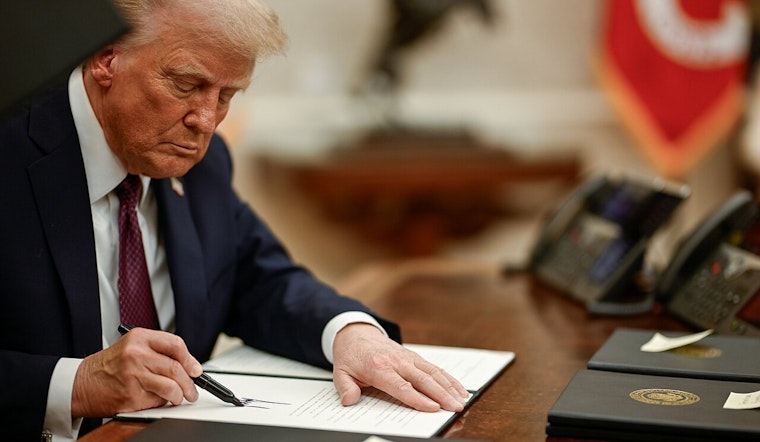
A decided chill has crept over local and state governments as they grapple with an abrupt freeze on federal spending, an initiative undertaken by the Trump administration. According to a report by CBS Austin, this freeze has placed nearly $100 billion in federal grants for Texas in jeopardy.
US Representative Lloyd Doggett articulated the growing apprehension: “It adds that uncertainty that is a real obstacle to moving forward. So I'm concerned about the airport, about the recent electric vehicle charging money we received here, about just a wide range of support for our universities, for our community college, for our school district, for our city, all of these now jeopardized by an abrupt and unconstitutional act,” he told CBS Austin.
Moving over to the judicial branch, a federal judge has temporarily stayed the freeze, particularly on funds previously awarded, which has left recipients from various sectors in a precarious limbo. The hold will last until 5 p.m. ET Monday, February 3, as reported by CNN. The freeze's impact spans a wide range of areas, from Meals on Wheels, a program serving more than 2 million senior citizens annually, to research grants at universities and other scientific institutions, causing widespread confusion and concern about its long-term effects.
Clarifications were necessitated as disarray took hold in various organizations that depend on federal funding. Mandatory programs such as Medicaid and SNAP, along with assistance like Pell grants and small business funds, were excluded from the freeze, the White House clarified. The National Association of Medicaid Directors confirmed that Medicaid was exempt after a brief hiccup which saw states temporarily unable to access federal funds for the health insurance program. "NAMD has been notified that Medicaid is exempt from the federal payment pause," stated Kate McEvoy, executive director of NAMD, in communication with CNN.
The legal battle is just heating up, with expectations set for a fast-track to the Supreme Court over the constitutionality of the funding freeze. Nonprofit organizations have been among the first to challenge the freeze in court, leading to the judge's temporary block. "From pausing research on cures for childhood cancer to halting food assistance, safety from domestic violence, and closing suicide hotlines, the impact of even a short pause in funding could be devastating and cost lives. This order could decimate thousands of organizations and leave neighbors without the services they need," Diane Yentel, CEO of the National Council of Nonprofits, conveyed to CNN.
With lawsuits piling up and a nation bracing for the full scope of the freeze's impact, signs of a thaw remain uncertain. This temporary reprieve may offer some relief, but for many, the freeze on federal spending is a harsh reality that puts essential services and programs in danger, turning the government's purse strings into ropes in a tug-of-war of political power and public necessity.





.jpg)