

























































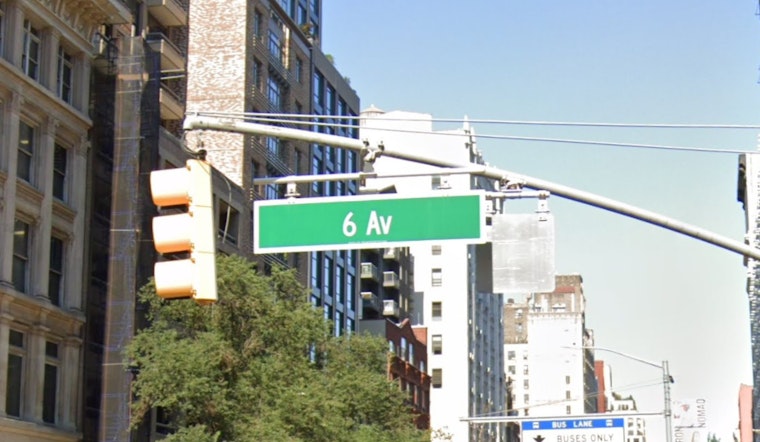
On Inauguration Day, Manhattan saw a convergence of protesters taking to the streets, imparting myriad messages that ranged from denouncing President Trump's policies to advocating for Palestinian rights. According to a FOX 5 NY report, over a thousand individuals marched along 6th Avenue, demonstrating their solidarity against a plethora of issues including racism, poverty, and militarism. The sizeable crowd that drew comparisons to Dr. King Jr.'s fighting spirit extended up to six city blocks at one point before dispersing just after 3 p.m.
Concurrently, the energy was somewhat muted in Lower Manhattan where only about 1,000 participants gathered for the New York City People’s March, as highlighted by The New York Post. This event was a stark contraction from the estimated 200,000 who mobilized in 2017, despite the march's evolution from its initial bearings on women's issues to embrace a more inclusive agenda, encompassing racial justice, LGBTQ+ equality, and other progressive causes. As per the report, Tanya Baranova, originally from Ukraine, expressed her concern for her home country by noting, "I think Trump is gonna f—k us … I’d like to say I’m hopeful but really, I’m just terrified."
The protests in NYC echoed sentiments expressed by larger movements nationwide, such as "The People's March" in Washington, D.C. The March on the capital, which organizers hoped would draw around 50,000 participants, was part of a broader wave of opposition, albeit still a diminutive echo of the half a million that showed up eight years prior. The protests have been fueling conversations and concerns on issues from economic justice to the eroding protections for trans and queer individuals.
Munroe, of the Caribbean Equality Project, told The New York Post during the march, "For me what I think is different this time around is that I see a lot more inclusivity ... we have workers here, we all these women’s right organizations, we have trans people, we have undocumented immigrants braving this weather." Adding to the discourse, Jay W. Walker, of Gays Against Guns, felt the diverse threats posed by the administration warranted the expansion of the march's scope. "It is essentially everyone in this country who is not a rich, straight, cisgender, heterosexual man," Walker expressed, discerning the varied vulnerabilities across communities.
Amid these demonstrations, the protesters also displayed concerns over international policies. With signs demanding an end to U.S. aid to Israel and a free Palestine, the marchers made clear that their grievances transcended national boundaries, paralleling the protests that have sprouted since the October 7 attacks in Israel and the subsequent war in Gaza. Simultaneously, chants from the demonstrators in New York also touched upon the federal approach to immigration, as protestors responded to President Trump's inauguration day declaration of a national emergency on the U.S.-Mexico border.





