

























































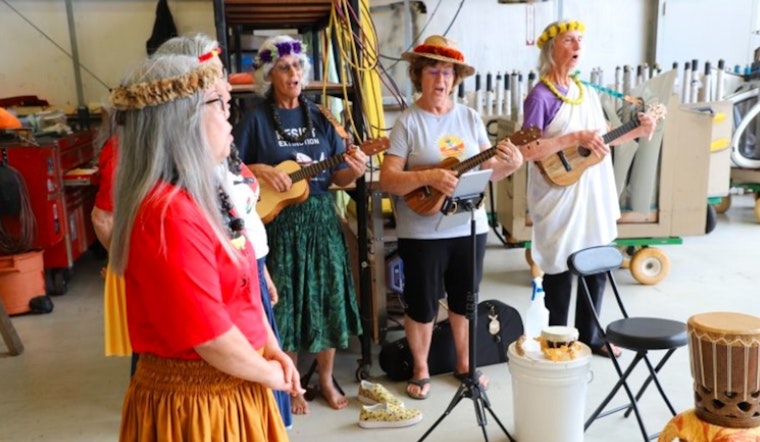
Kaua‘i's forest bird population is receiving a boost with the help of helicopters as part of a new conservation effort. At Līhuʻe International Airport, over two dozen individuals began the field season with a traditional blessing. The focus is on using helicopters to improve conservation efforts in the region, which has had a significant impact on the Kaua‘i Forest Bird Recovery Project (KFBRP).
According to a release from the Department of Land and Natural Resources, Dr. Lisa 'Cali' Crampton, head of KFBRP, said, "When we started doing all the work we do in the Alaka‘i the only air support we had was to get our food and our really heavy supplies in and out of the Alaka‘i and we did all the rest of the things we needed to do on foot."
This season, helicopters are being used to tackle the mosquito population, which spreads avian malaria that affects native bird species. The aerial strategy includes releasing genetically modified male mosquitoes to disrupt breeding and using a biological larvicide to target mosquito larvae. Justin Hite, a former KFBRP member, shared in the same release, "Physically, just getting to the different spots where the work’s going to take place is a two-hour drive, plus a seven-hour hike. To do the work in a productive way you’ve got to have air support."
As per the Department of Land and Natural Resources release, helicopters are also transporting eggs for a new conservation breeding program. Crampton explained, "If we can’t get those eggs out in a timely fashion by helicopter, the program won’t work because it’s too dangerous and too time consuming to hike tiny little eggs out."
The local community and partners like Jack Harter Helicopters are also involved. Casey Riemer, special projects director at Jack Harter Helicopters, spoke during the blessing about the company’s founder, who had always been concerned about the forest birds. The company now offers a way for customers to contribute to conservation efforts through their website.





