

























































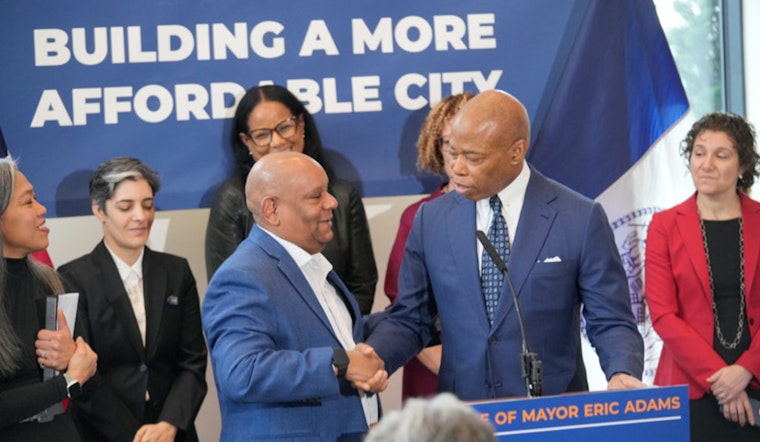
New York City's commitment to affordable housing has shown significant progress under Mayor Eric Adams' administration. On a recent announcement reported by the Office of the Mayor, the city has celebrated back-to-back calendar years of record-breaking production of affordable housing units, signaling a proactive response to what many are calling a generational housing crisis.
According to details released by the Mayor's office, the most recent figures showcase an increased focus on marginalized groups, including the formerly homeless with a total of 4,623 units, and the addition of 2,761 supportive housing units, alongside 2,966 units specifically designed for senior residents — all constructed within the previous year. Mayor Adams, in a statement highlighted the effort, "Since day one of our administration, building housing and bringing down the cost of living has been one of our top priorities." However, beyond just numbers, the initiative has been noted as bringing more than just affordable living spaces but offering "dignity, security, and a future" to those in need, as expressed by HPD Commissioner Adolfo Carrion.
The Adams' administration has also been keen on bridging the gap between those living in shelters and stable, permanent housing. In 2024 alone, nearly 14,654 households were moved into affordable units, a feat that has been linked with a set of reforms that have eased access to CityFHEPS vouchers. These reforms have seen a 24% year-over-year increase in households transitioning out of shelters using rental subsidies, as per the statistics shared by the New York City Department of Social Services.
But the city's efforts haven't stopped at the borders of affordable rental units. Homeownership has also been a key pillar, with Mayor Adams and HPD touting a $82 million investment in the HomeFirst Down Payment Assistance Program, designed to make homeownership more achievable for New Yorkers. These efforts are resonating with various stakeholders, like Christie Peale, CEO/executive director of Center for NYC Neighborhoods, Inc., who lauded the move, stating to the Mayor's office, "It is especially encouraging that the number of affordable homeownership opportunities created this year more than doubled last year's production."
As the housing agenda wears on, major construction projects and policy reforms are simultaneously taking shape. The city has embarked on ambitious plans like the "Manhattan Plan", promising 100,000 new homes in the borough, along with legislative advancements such as "City of Yes for Housing Opportunity," geared towards ramping up housing production, as noted by the Mayor's office. These steps are a comprehensive display of the administration's determination to alleviate the housing crisis, which the New York Building Congress's Carlo A. Scissura, Esq describes as showing that "the Administration's aggressive work pay constant dividends."
Moving forward, the approach appears to be multifaceted, utilizing every tool available, from state grants aiding the creation of accessory dwelling units to fostering affordable homeownership. Assemblymember Jenifer Rajkumar points to this, speaking about the progress and ongoing work "to expedite housing production," through various legislative efforts, as detailed by the Mayor's office. Additionally, the city's engagement with the community and collaboration with private sector leaders like David Schwartz, principal at Slate Property Group, acknowledge the impactful and sustained focus on the housing crisis that is starting to translate into more projects and, ultimately, more homes for New Yorkers.
With a deepening crisis at hand, the Adams administration, supported by advocacy groups and housing experts, continues to move towards a more inclusive, stable living environment for the residents of New York City, according to the Mayor's office. As Marc L. Greenberg of the Interfaith Assembly on Homelessness and Housing puts it, the city's efforts to combat homelessness and create housing solutions across the spectrum is a testament to the commitment "to work with our government partners towards a day when homelessness is no longer a chronic reality but a short-term result of personal crisis."





