

























































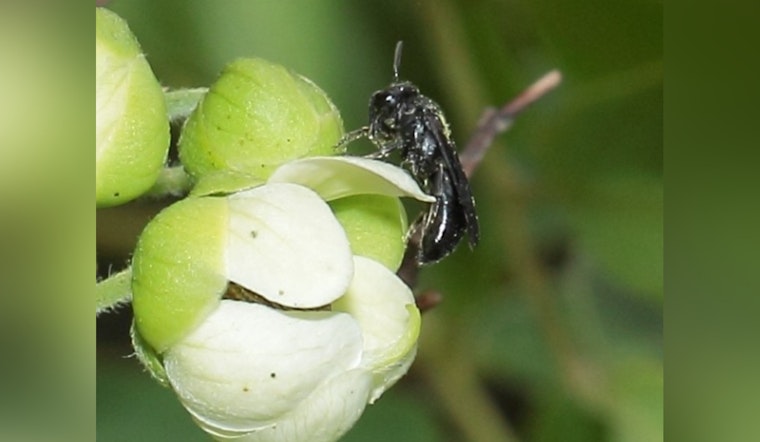
A new bee species, Hylaeus paumako, has been identified on Moloka‘i. The discovery was made by Dr. Karl Magnacca, an entomologist with the Department of Land and Natural Resources Division of Forestry and Wildlife, during a field survey in May. The bee is notable for its all-black face, a feature not found in Moloka‘i's male bee population. The species was found among the native plants in the area.
The area has pockets of native vegetation that support various species despite erosion and non-native plant invasions. He credited the Moloka‘i Plant Extinction Prevention Program team for bringing him to the site. "While I didn’t expect to find many bees during my visit, the presence of the native shrub kolomona (Senna gaudichaudii) piqued my interest. It was there that I first noticed the distinctive markings on one of the bees," he said, noting the bee's all-black face. The conservation site remains important for the survival of this bee and other rare plant species, according to the Department of Land and Natural Resources.
Hawaii is home to 64 species of bees in the Hylaeus genus, all of which trace back to a single ancestor that arrived 1 to 1.5 million years ago. These bees evolved to fit specific ecosystems, particularly mesic forests, which, according to Magnacca, "These mesic forests are the most diverse in terms of native plants and insects in general, and also the most threatened." Over the past three years, Magnacca has collected around 500 new species and said, "I do expect there will be more discoveries among the native bees." The bees' ability to survive in small or damaged habitats suggests they may be doing better than previously thought, as stated by the Department of Land and Natural Resources.





