

























































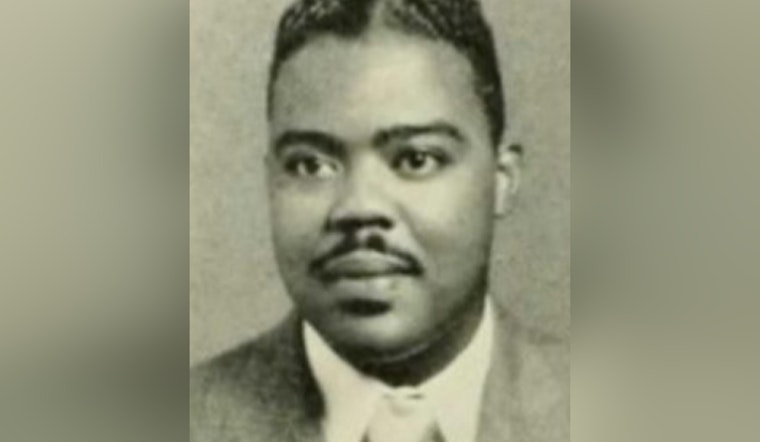
A slice of North Carolina's civil rights history gets permanently etched onto its landscape as James Robert Walker Jr., a formidable figure in the legal fight for racial equality, is honored with a North Carolina Highway Historical Marker. The dedication ceremony is set at the New Ahoskie Missionary Baptist Church for February 22 at 1 p.m. Walker's marker will stand at the crossroads of U.S. 13 and N.C. 42 in Ahoskie, the very soil that not just bore him, but also felt the tremors of his strides for justice.
Walker, who was born in this exact region in 1924, embodied the quest for progress and representation. After serving in World War II, he went on to be honorably discharged from the United States Army, consequently to quickly snap up a bachelor's degree from North Carolina College, now North Carolina Central University. His legal prowess, sharpened at UNC-Chapel Hill, made him one of the two first Black graduates in 1952—breaking barriers that stood for centuries. His return to northeastern North Carolina saw him not only apply, but actively advocate the law in a struggle to secure voting rights across a swath of counties including Halifax and Gates.
An organizing force, Walker took up the mantle as president of the Eastern Council on Community Affairs. The group pushed hard for Black voices to find their place in local and state government, while also combating any legislative attempts to keep school doors barred to integration. His arguments, both in the court of law and in public discourse, were noted for their clarity and conviction, earning him a spot as the first Black member of UNC-Chapel Hill's Dialectic and Philanthropic Societies. His work won him the Distinguished Service Award from the state's NAACP, and decades later, in 1978, the National Lawyers Guild named him Lawyer of the Year.
James Walker Jr.'s legacy lasted until his passing in 1997, but the resonance of his advocacy will soon be able to visibly mark the state that witnessed his dedication. For those with a drive to explore further into this tribute and the myriad of contributions by North Carolinians, they can delve into the details on the N.C. Department of Natural and Cultural Resources website.



