

























































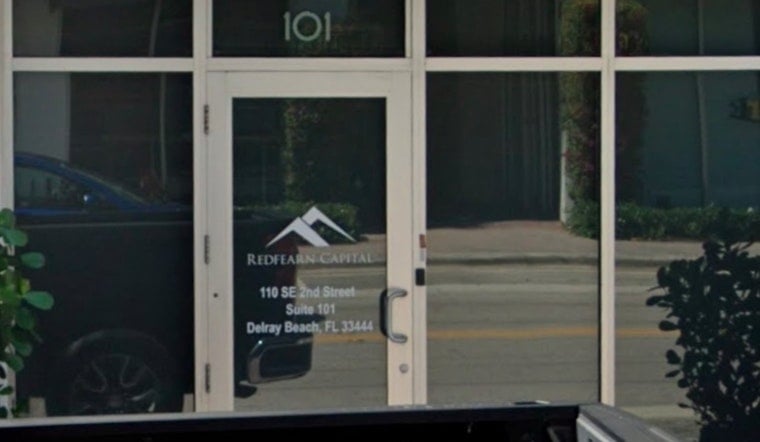
A Delray Beach-based real estate firm has closed its biggest deal yet, teaming up with global investment giant TPG AG Real Estate to acquire a 53-building industrial portfolio spanning seven states for $628 million. The purchase, backed by a $479 million loan, covers 5.4 million square feet of distribution, logistics and manufacturing space stretching from Florida to Oregon.
Redfearn Capital, alongside TPG Redfearn, Atlanta Property Group and Matterhorn Venture Partners, bought the portfolio in a deal reported by The Real Deal. The portfolio spans Florida, Georgia, North Carolina, Tennessee, Minnesota, Illinois and Oregon, with about 75 percent of the properties concentrated in the Southeast, including Lakeland, Tampa, Atlanta, Raleigh and Charlotte. Alex Redfearn, founder, president and CEO of Redfearn Capital, said the deal reflects his company's commitment to markets with “long-term demand.”
The financing behind the purchase came from merchant bank BDT & MSD Partners, which committed $479 million in debt, according to Commercial Observer. BDT & MSD Partners was formed through the merger of BDT & Company and MSD Partners, the outlet noted. A TPG press release detailed how the three operating partners will split management duties: Redfearn Capital is leading the transaction and overseeing Tampa, Lakeland and Memphis; Atlanta Property Group will manage Atlanta, Raleigh/Durham and Charlotte; and Matterhorn Venture Partners will handle Chicago, according to TPG.
A Shallow-Bay Bet in a Tightening Market
The portfolio primarily consists of shallow-bay warehouses, a property type that has quietly outperformed bigger industrial formats for years. Cushman & Wakefield's Q2 2026 MarketBeat report found that shallow-bay product nationally posted a 4.8 percent vacancy rate — the lowest of any industrial size segment — while asking rents grew 2.9 percent year-over-year, with positive rent growth in 67 percent of tracked markets. CBRE Research has similarly found that shallow-bay vacancy rates have stayed below overall U.S. industrial vacancy since 2017, a trend it attributes to stagnant new supply and steady demand from last-mile and service occupiers who have historically been passed over by developers favoring bigger single-tenant builds.
That structural imbalance helps explain why institutional capital keeps flowing into the category. In June, Business Wire reported that BDT & MSD Partners committed $250 million in strategic capital, plus $100 million from platform founders, to launch Speed Bay Warehouse Solutions, a new platform dedicated to shallow-bay assets and led by former Black Creek Group executives. Redfearn and TPG's newly acquired portfolio arrives amid that same wave of institutional interest.
Southeast Hubs and a Chicago Foothold
Lakeland and Tampa benefit from the Interstate 4 corridor, while Atlanta, Raleigh and Charlotte serve as major regional distribution hubs tied together by extensive interstate highway networks. Southeast markets in the portfolio attract industrial demand tied to population growth, expanding manufacturing and logistics operations, and robust transportation infrastructure, according to CBRE.
The Chicago piece of the portfolio, managed by Matterhorn Venture Partners, sits in a market with its own tight fundamentals. Industrial vacancy in Chicago compressed to 4.5 percent in the second quarter of 2026, supported by strong shallow-bay leasing and 5.8 million square feet of net absorption, according to JLL Research. Chicago industrial leasing has surpassed 10 million square feet for a fourth consecutive quarter, the firm's research shows.
The South Florida Occupancy Puzzle
Overall, the portfolio is 87 percent occupied, and a Redfearn spokesperson said the company will determine how long to hold the buildings based on market conditions, with no significant renovations planned for any of the properties. TPG, for its part, plans to invest in deferred building repairs and upgrades aimed at retaining existing tenants.
Lifting occupancy could prove trickiest in South Florida, where the industrial market has cooled. The region's industrial vacancy rate rose to 6.7 percent in the second quarter, up from 5.6 percent a year earlier, even as landlords continued raising rents. South Florida tenants gave back more space than they leased for the fifth straight quarter, returning 2.3 million square feet to the market, though not every deal has gone sour — Ryder System signed a 409,000-square-foot lease in Opa-locka even as developers scaled back new construction, with 6.4 million square feet still under construction regionally. South Florida industrial buildings have also continued to sell for higher prices on average, and Prologis recently acquired an industrial portfolio in Davie for $352 million.
A Deepening Partnership
The seller was DRA Advisors, according to a source familiar with the deal. Hoodline has previously reported DRA's pivot toward multifamily, including a $95 million apartment acquisition in suburban Chicago, as the firm reallocates capital out of retail and industrial holdings and toward suburban multifamily and selected retail deals.
Redfearn and TPG have worked together since 2021, and this acquisition marks the largest deal the two have done together. It follows a pattern of scaling up: in February, REBusinessOnline reported that Redfearn Capital and TPG Angelo Gordon closed a $150 million refinancing through Prospect Ridge for a 10-property Florida industrial portfolio, backed by an initial $80 million mortgage arranged by CBRE's debt team. Redfearn Capital, which operates out of Delray Beach and now has more than $1.2 billion in assets under management, has also stayed active closer to home — Commercial Real Estate Direct reported that the firm acquired an office and industrial asset in Delray Beach for $37 million, and Hoodline previously reported that Redfearn sold a Jacksonville warehouse for $37.39M to G3 Enterprises, a nearly $10 million gain after buying the facility in 2024 for $27.18 million and completing upgrades.
Redfearn's own broader holdings include 8 million square feet mainly in the Southeast, while TPG manages $327 billion in assets globally. With the new acquisition, the two firms are betting that shallow-bay logistics space — scarce to build and steadily in demand — will keep paying off even as pockets of the market, like South Florida, work through a temporary glut.





