

























































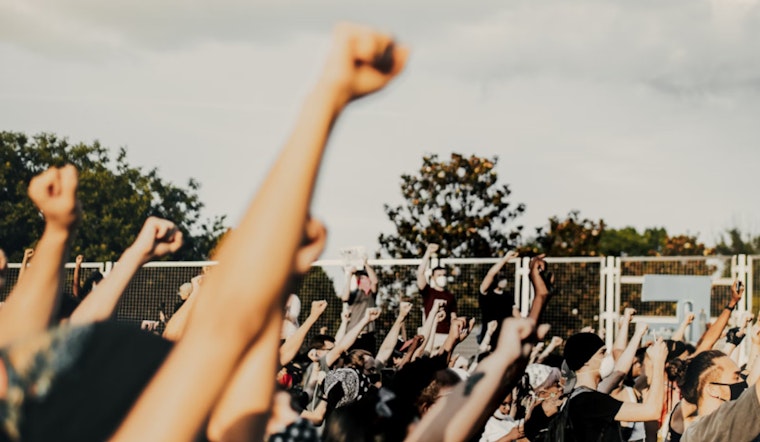
Yesterday, a formidable crowd of roughly 20,000 individuals gathered in Houston, taking to the city's streets to voice an impassioned call for immigration reform and stronger protections for undocumented immigrants. In a display of unity and determination, the mass of protesters initiated their peaceful march at Ervan Chew Park around 3 p.m., threading their way through the arteries of Montrose, surging towards Hermann Park, and circling back, according to Click2Houston.
he procession was not only a testament to the communal spirit but also disrupted the regular flow of Houston's infrastructure, temporarily closing several intersections along Richmond Avenue and even the Southwest Freeway. However, the protest, lasting over six hours and concluding around 9:30 p.m., ended without any instances leading to detentions. Fox 26 Houston reported insights from those involved in the protest, including individuals like Krystal Jasso, who remarked, "We feel like our nation is broke at this moment and this is just a symbol and a voice for ancestors for the people that came before us and the people that are here right now."
Central to the organization of the event were the efforts of FIEL Houston, an immigrant-run civil rights institution that was principally joined by Immigration Youth Texas. The gathering's size and serenity were the underpinning of its powerful message—a message made personal by protestors like Jade Gallardo, who revealed in an interview her intimate connection to the cause, saying, "I came out here to protest because my mom is an immigrant and she crossed over the border and she had to work a lot, and so is my dad. My dad had to work a lot to come over the border to try to give me and my siblings a better life in America," as per Click2Houston.
The convictions were as varied as the crowd itself; some marched burdened with personal stories like Gallardo's, while others, like Sergio Carrillo, carried broader fears. He told Fox 26 Houston, "We feel that our family could be broken apart even though we are here legally. They are all US citizens. I am here on a green card." These are not just passing concerns, but a recurring message heard throughout a community united by both geography and a shared desire for fair treatment in the broader American story.





