

























































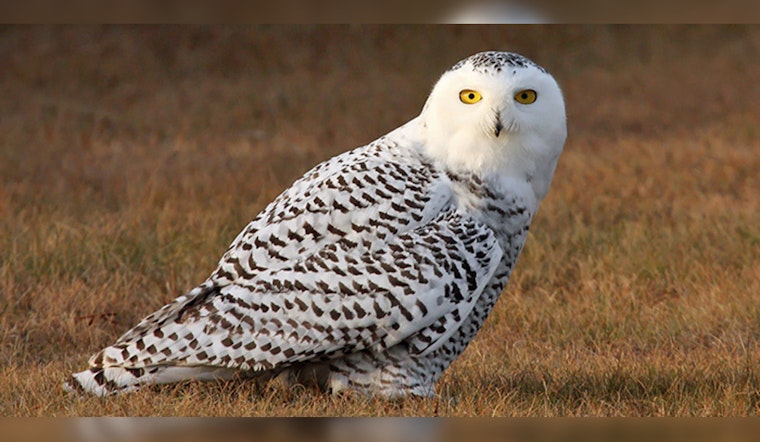
The Wisconsin Department of Natural Resources (DNR) has released the results of a necropsy on a deceased snowy owl found in New Glarus on February 5, revealing that emaciation and an abundance of intestinal parasites caused its death, according to a statement made public yesterday. The DNR, which sent the owl’s remains to the National Wildlife Health Center in Madison, noted that these parasites hindered the bird’s nutrient absorption and confirmed the absence of avian influenza in their findings.
Local interest in the owl had surged, for it had taken up residence in an easily reachable spot, its hunting endeavors observable by day's light—daily attracting a diversity of individuals from passers-by to serious wildlife photographers who sought the beauty and rarity of this Arctic transient, as per the DNR's observation. Despite the bird's apparent vigor and ability to hunt, the autopsy revealed a contrary internal struggle, and while there was no concrete evidence to blame human activity for the snowy owl's decline, the bird's quiet suffering serves as a reminder that what we see on the surface may not reflect the true state of wildlife.
The snowy owl's vulnerability was not unusual, as reports indicate that birds of prey can often suffer from heavy parasitic loads, which may be influenced by genetic factors, immune system strength, or diet, according to the DNR's release. Notably, the ill-fated owl did not shy away from human proximity, which could indicate an attempt to conserve energy. This is particularly important, as survival in the wild is fraught with challenges, the DNR explained, citing disease, predation, injury, weather, unfamiliar surroundings, and inexperience as potential perils for these creatures.
In the encounter with nature, as this case so poignantly illustrates, there is a fine balance that must be respected by those who observe and document wildlife; while the snowy owl's passing is a somber testament to the harsh realities faced by animals in the wild, it also compels onlookers to consider their own role in the preservation or disruption of these delicate ecosystems, as we all play a part—albeit often unknown—in the intricate dance of life and death that unfurls in nature's vast amphitheater, a truth that the DNR subtly hints at through its meticulous investigation and the insights it garnered from the snowy owl's untimely death.


