

























































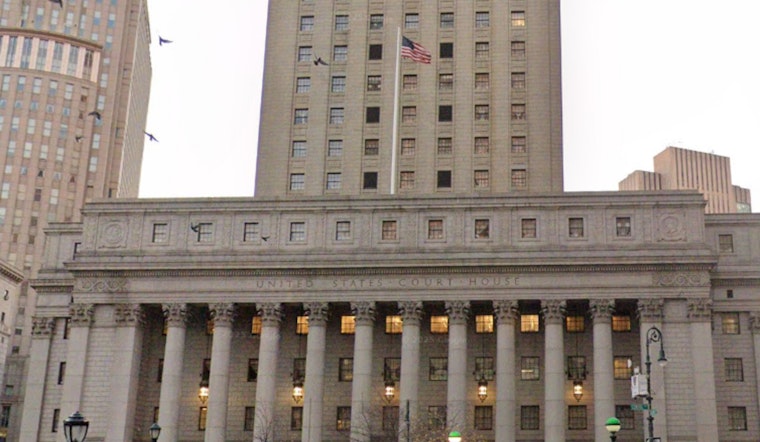
In a significant move, federal judges in New York and Texas have issued rulings to temporarily block the deportation of Venezuelan migrants, challenging the Trump administration's use of the Alien Enemies Act. The Southern District of New York’s Judge Alvin Hellerstein has put a stop to the deportations within his jurisdiction, which includes Manhattan, the Bronx, and several other counties, according to Gothamist. This decision comes on the heels of President Trump's controversial decision to deport alleged members of the Venezuelan Tren de Aragua gang under the 1798 Act.
The ACLU, alongside regional civil liberties unions, contested the administration's approach, arguing it ignored due process. "The court in New York properly recognized that the right to judicial review is of no value without notice," Lee Gelernt, deputy director of the ACLU’s Immigrants’ Rights Project, told Gothamist. The judge’s temporary restraining order is an answer to these due process concerns, effective until the parties regroup in court on April 22, following their responses to the judge's order.
Similarly, in Texas, U.S. District Judge Fernando Rodriguez Jr. acted to not just prevent but to also ensure that deportations from the El Valle Detention Center in Willacy County were halted. The Texans judge’s order prohibits the moving or removing of aforementioned Venezuelan migrants until at least April 23, per CBS News. This comes as a parallel action to the Supreme Court's recent clearance to resume deportations, albeit with specified due process protections.
These judicial decisions represent a legal pushback against an administration measure to swiftly deport individuals based on alleged gang affiliations, underscoring the tension between national security concerns and individual liberties. Rodriguez, in his decision, emphasized the potential for "irreparable injury" to those deported without due process. "In the present matter, the court finds that the removal of J.A.V, J.G.G., W.G.H., or any other individual subject to the proclamation, by the United States would cause immediate and irreparable injury to the removed individuals, as they would be unable to seek habeas relief," he explained, as documented by CBS News.
The ACLU and associated parties are not only fighting for the individual cases but are advocating for a broader halt on all deportations of Venezuelans under this statute, challenging the constitutionality of the Alien Enemies Act’s application, given that the U.S. is not at war with Venezuela. The Supreme Court, while allowing deportations to resume, has clarified that due process must be upheld, introducing a measure of legal scrutiny in what has been a fiercely contested application of an old law.





