

























































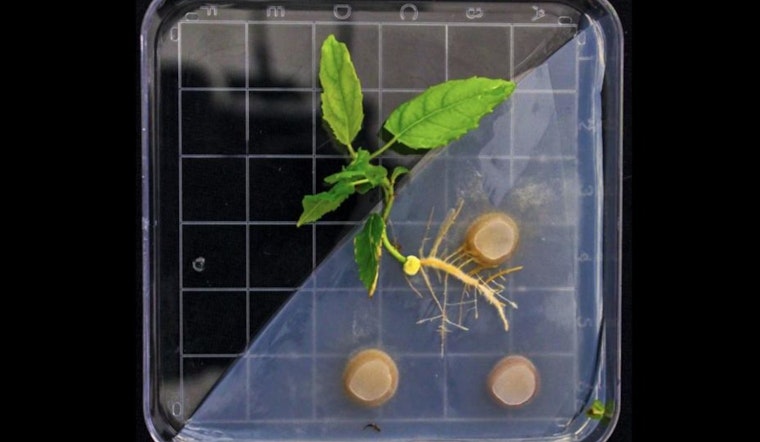
In the quest to bolster the nation's energy security and fortify the bioeconomy, scientists at the Department of Energy’s Oak Ridge National Laboratory (ORNL) are delving into the microscopic world hidden in the roots of Populus trees to understand and harness the power of microbial relationships. According to ORNL's recent findings, the key could lie in the soil, with untapped potential found within the symbiosis of bacteria and fungi that influence plant health and productivity.
Defining a path forward through uncharted territories, the ORNL team, under the guidance of Dale Pelletier, the Integrative Microbiomics group leader, develops synthetic communities, which are scaled-down, laboratory-constructed versions of these populous microbial ecosystems. These synthetic communities facilitate research by replicating the interactions between plants and their microbial symbionts in a more manageable form. Pelletier told the ORNL publication, “We can make synthetic communities with just two organisms or scale up to 10, 100 or more.” This method paves the way to pinpoint how these tiny organisms fight for resources, enhance plant growth, or affect one another in a controlled setting.
At the heart of this effort are poplars, chosen for their swift growth and environmental adaptability, making them prime candidates for bioenergy production. The team at ORNL has assembled an extensive array of bacterial and fungal isolates from these trees, enabling them to select specific strains for their synthetic communities based on genetic characteristics or prevalence in natural settings. ORNL's efforts are part of a larger initiative, the Plant-Microbe Interfaces Science Focus Area, backed by the DOE’s Office of Science.
The journey to disentangle the web of interactions within these microbial communities is fraught with challenges, not the least of which is the increase in complexity when a plant is introduced into the mix. Environmental factors such as nutrient availability and stresses like drought add layers of difficulty. As plant pathologist Tomás Rush indicated in the ORNL research summary, “Microbial behavior is influenced by many factors — nutrient availability, light, humidity and environmental stresses like drought. When you introduce a plant, the complexity increases exponentially.”
The long-term aim is to predict how microbes will behave within their communities based solely on their genomic data. Achievements in this field could revolutionize the use of energy crops by identifying microorganisms that bolster resilience and growth, and all of this could translate into real-world applications that strengthen the bioeconomy and energy independence. Rush encapsulated the sentiment well in his statement to ORNL, saying, “The questions we’re addressing aren’t easy. But the complexity is part of what makes this work so exciting. It’s a challenge worth pursuing.”





