

























































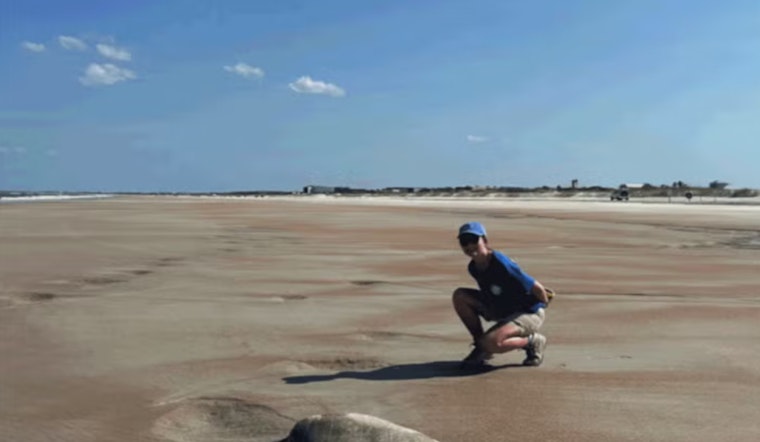
St. Johns County is stirring up sand for the sea turtles, embarking on beach tilling processes designed to boost the survival of these endangered reptiles and their nesting habits—because nothing says "home sweet home" like perfectly fluffed up sand if you're a big ole sea turtle. The tilling, part of a yearly ritual to keep beaches turtle-friendly post-restoration, started with the hustle and bustle of heavy machinery at Pope Road on April 3, according to a statement obtained by St. Johns County, though for locals it means a temporary adios to the Pope Road Beach Access—the price we pay for ecological responsibility, folks.
Here's the scoop on closures and the scheduled tilling sessions: Vilano is on deck from April 7-8, no closures there, and the sea turtle party train moves to South Ponte Vedra April 9-10, then wraps up in Ponte Vedra April 10-11, ditto on no shutdowns; the drill (or, rather, plow) is all about creating the dream nursery for these shelled moms-to-be, and Sloane Stephens, the County's Coastal Environment Project Manager, spelled it out: "Tilling is part of the permit monitoring requirements following beach restoration projects," and just to throw in some animal-friendly lingo, they're using spotters to look out for humans and any early bird turtles that might be around, as per St. Johns County.
Cue the impressive stats: nearly 5,000 sea turtle nests have peppered St. Johns County's 42-mile stretch of sandy real estate in the last half-decade, and last year, beachgoers and turtle aficionados alike witnessed a quartet of Kemp’s ridley sea turtle nests, which quite frankly is like hitting the ecological jackpot given their dicey numbers—just ask Ashley Raybould, the Environmental Supervisor who waved the eco-flag saying, "This process helps sea turtles successfully dig their nest chambers and strengthens our ecosystem," as reported by St. Johns County.
So, while the beach tilling might be a tad inconvenient for your sunset strolls or the impromptu frisbee sessions, remember it’s all in the name of conservation; it’s about giving those prehistoric marine reptiles a fighting chance to continue their lineage on our bustling Florida shores because at the end of the day, or the beginning, since the tilling will begin at daybreak, we're just trying to keep our scaly friends from becoming historical footnotes.





